The Amalgam Myth That Trips Up Dental Practices
Ask a busy dental team which of their waste is "special," and most will name amalgam — and stop there. That single blind spot is where a lot of otherwise well-run Dubai practices pick up non-conformities. A dental clinic is one of the most waste-diverse healthcare settings there is: in a single operatory you generate mercury-bearing waste, sharps in several forms, infectious material, imaging chemicals and expired pharmaceuticals — each needing its own container and its own treatment route.
Amalgam matters, but it's one stream of many. Get the full picture right and inspections become routine; get it wrong and the risk sits with the practice as the waste generator.
Dental practices are among the 250+ healthcare facilities Dotless Green Environmental Services collects from each month. Its HWTV permits (HWTV-181225-02457, HWTV-311025-02400, HWTV-160725-02237) authorise the full range a dental clinic produces — clinical (H1), pharmaceutical (H2) and chemical waste — transported on RASID-tracked vehicles to Dubai Municipality-approved treatment, with records returned. Dotless has operated in Dubai since 2017 and serves 800+ clients.
The Waste Streams a Dental Clinic Actually Produces
Amalgam waste
Capsules, excess mix, extracted teeth with fillings, chairside separator contents.
Sharps
Needles, scalpel blades, burs, endodontic files, orthodontic wires, matrix bands.
Infectious/Clinical Waste
Blood-soaked gauze, gloves, saliva-contaminated single-use items.
Chemical/Imaging Waste
X-ray fixer and developer, lead foil, disinfectants.
Pharmaceutical Waste
Expired local anaesthetics, medicaments, unused prescriptions.
Amalgam and Mercury — The Stream that Needs Special Handling
Dental amalgam contains elemental mercury, which is why it can't follow the ordinary clinical waste route. Mercury vaporises under the high temperatures used to treat infectious waste, so amalgam must be captured and diverted separately: amalgam capsules, contact and non-contact scrap, and the contents of chairside amalgam separators all go into dedicated, sealed amalgam containers for specialist treatment. Never rinse amalgam into the wastewater line and never place it in yellow clinical bags.
Dental sharps: more than just needles
Dentistry produces sharps most clinics forget to classify. Beyond hypodermic needles, your rigid puncture-proof container should receive burs, broken instruments, endodontic files and reamers, orthodontic wires, matrix bands and scalpel blades. Anything that can cut or puncture belongs here — not in a soft clinical bag it would pierce. Seal at the fill line and hand over to a licensed collector.
Infectious Waste and Extracted Teeth
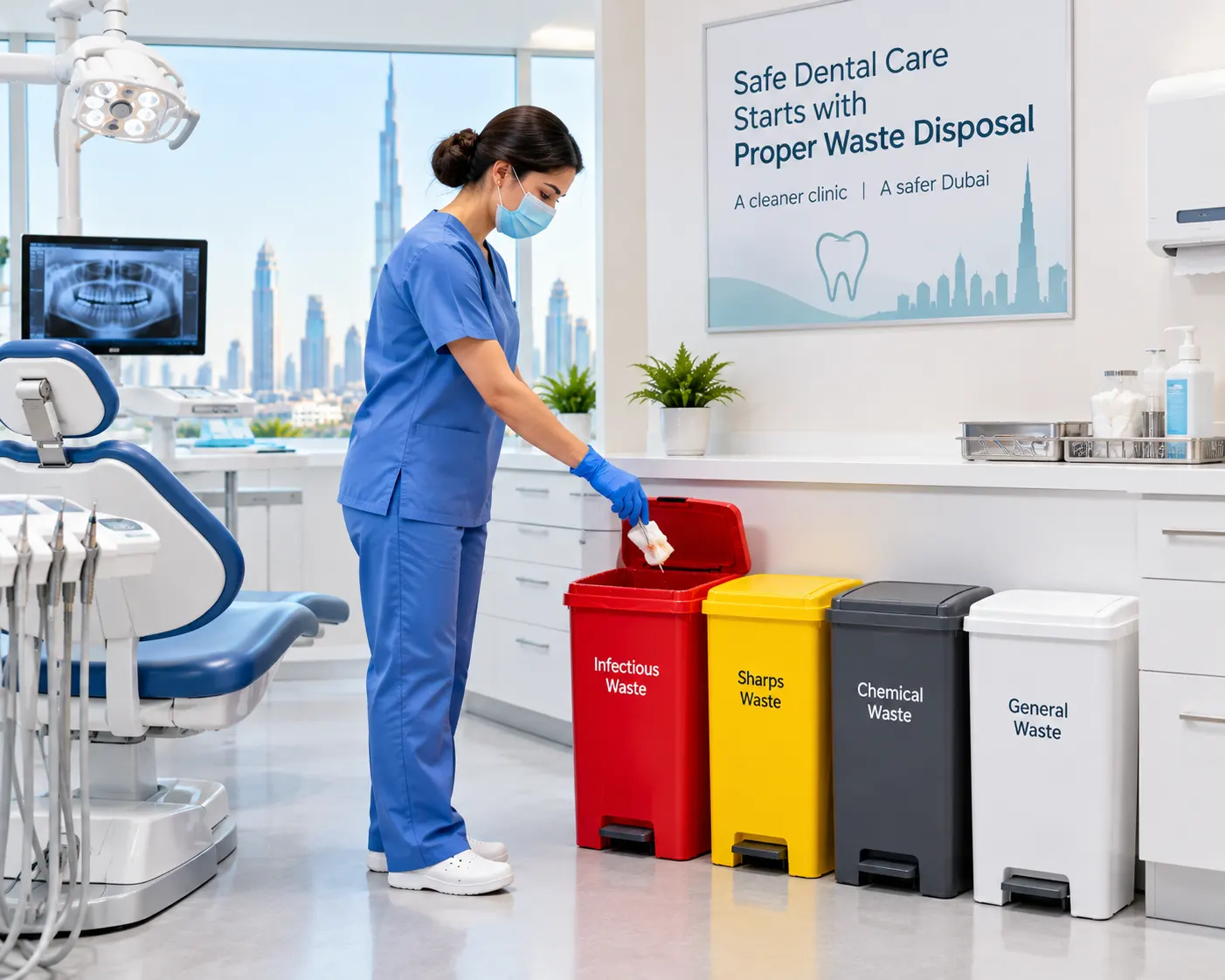
Blood-contaminated gauze, cotton rolls, gloves and single-use items go into yellow clinical-waste bags for treatment as infectious waste. Extracted teeth are the exception that catches people out: a tooth without amalgam can follow the infectious waste route, but an extracted tooth with an amalgam filling is a mercury-bearing waste and must be diverted to the amalgam stream. Sort extracted teeth accordingly rather than defaulting them all to clinical waste.
Chemical and imaging waste
Practices still running film-based radiography generate spent fixer and developer solutions and lead foil — all regulated chemical waste that must not enter the drain or general bin. Surface disinfectants and certain reagents fall into the same category. Digital-imaging practices avoid the fixer/developer streams but should still account for any chemical disinfectants they discard.
Building a Compliant Chairside System
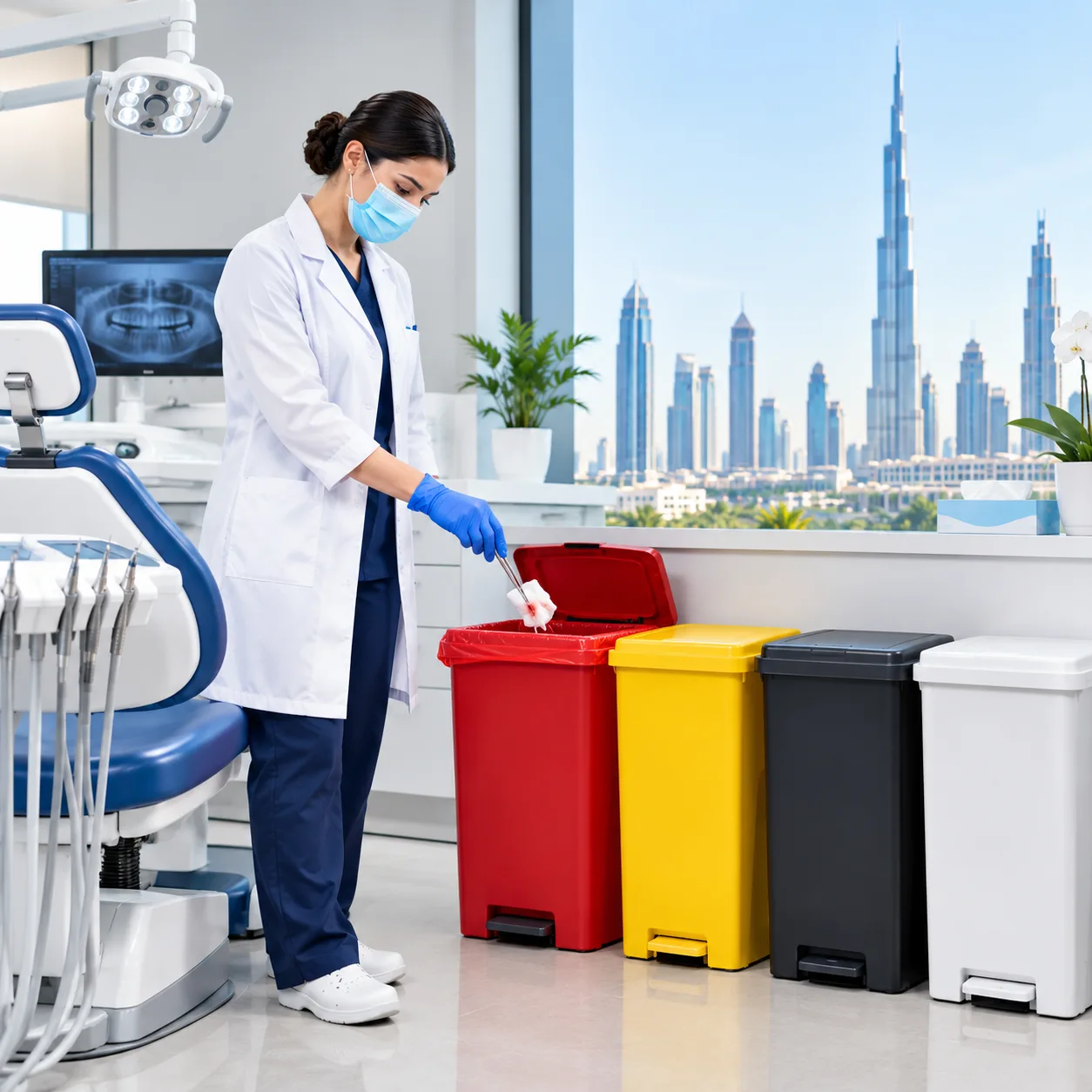
Compliance in a dental setting lives at the chairside. Give every operatory the full set of containers — sharps container, clinical waste bin, amalgam container — within arm's reach, clearly labelled, so the correct choice is instant. Keep imaging chemicals and pharmaceutical waste in their own labelled containers in the relevant areas. Brief every clinician and nurse on the extracted-teeth rule specifically, because it's the one most often missed. Then route everything to a designated internal holding area for scheduled collection.
Choosing a collector for a dental practice
A dental practice needs a collector that can handle all its streams — including amalgam — under proper documentation, not just take the yellow bags. Verify active HWTV transport permits, registered vehicles, and treatment at Dubai Municipality-approved facilities, with paperwork returned to you.
Dotless Green Environmental Services collects clinical and specialist dental waste for practices across Dubai, transporting under active HWTV permits (HWTV-181225-02457, HWTV-311025-02400, HWTV-160725-02237) on RASID-registered, GPS-tracked vehicles, with waste treated at approved facilities and documentation returned. Serving 500+ medical waste clients across more than 1,000 clinics with a 5.0 rating over 186 Google reviews, Dotless gives dental practices a single documented relationship for every stream the chair produces.
Soft CTA: If your practice needs one collector to handle amalgam, sharps and clinical waste under one documented schedule, talk to the Dotless medical waste team.
Frequently Asked Questions
Can dental amalgam go in the clinical waste bag?
No. Amalgam contains mercury and must go into a dedicated sealed amalgam container — never into clinical waste or the drain — because mercury vaporises under standard treatment.
How do I dispose of extracted teeth in Dubai?
Extracted teeth without amalgam can follow the infectious waste route; teeth with amalgam fillings are mercury-bearing and must be diverted to the amalgam stream.
Are dental burs and files considered sharps?
Yes. Burs, endodontic files, orthodontic wires and broken instruments all go into the rigid sharps container alongside needles and blades.
What do I do with old X-ray fixer and developer?
Spent fixer, developer and lead foil are regulated chemical waste. They must never go down the drain or into general waste and should be collected by a licensed carrier.
Does a small dental clinic need a licensed waste collector?
Yes. Any facility generating clinical or hazardous dental waste needs collection by a carrier holding a valid HWTV permit, with treatment at an approved facility.
Can one company handle all my dental waste streams?
Yes — a full-service medical waste provider can manage amalgam, sharps, infectious and chemical streams together. Dotless Green Environmental Services covers all of these across Dubai.
Related posts
Pharmacy Waste Management in Dubai
How to Choose a Medical Waste Company in Dubai
Regulated vs General Medical Waste: Dubai Guide
Ready to get it done?
Tell us what you need and we'll help you find the right service.