Two Bins, Two Very Different Destinations
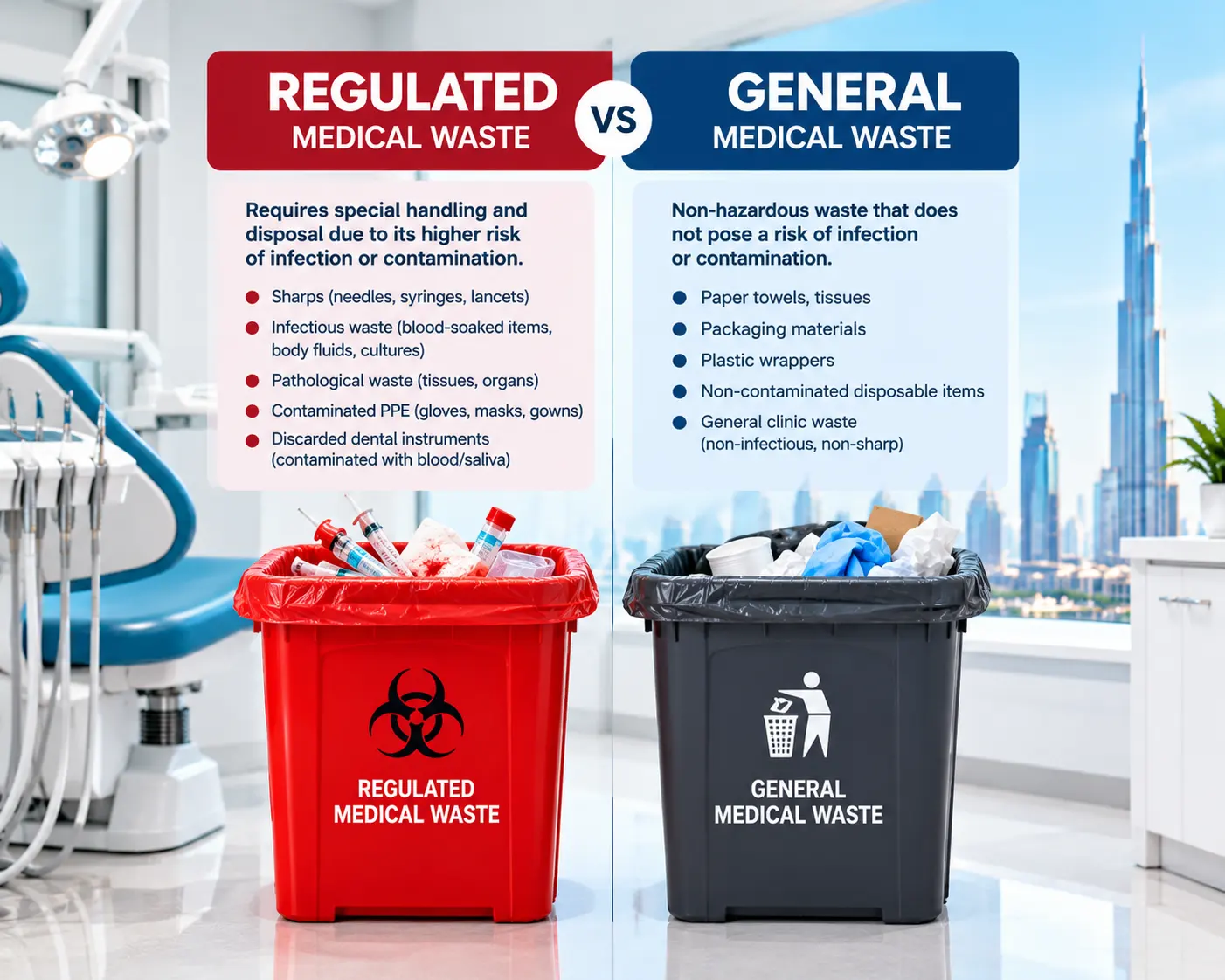
Set a regulated-waste bin and a general-waste bin next to each other, and they look almost identical. What separates them is where their contents end up. The regulated bin's contents leave your premises on a permitted vehicle and are treated at a Dubai Municipality-approved facility. The general bin's contents follow the ordinary municipal waste route. Same room, two entirely different journeys — and every item your staff drop is a decision about which journey it takes.
Most clinics never think about that decision in cost or compliance terms. They should, because it drives both.
Dotless Green Environmental Services is a DM-registered non-restricted hazardous waste transporter, authorised under active HWTV permits (HWTV-181225-02457, HWTV 311025-02400, HWTV-160725-02237) to collect clinical, pharmaceutical and chemical waste and deliver it to Dubai Municipality-approved treatment facilities. That regulatory standing is what lets Dotless help clinics classify their streams correctly — treating only what genuinely needs it. Operating since 2017, Dotless serves 800+ clients and handles around 6–7 tonnes of regulated medical waste a month.
What Makes Waste "Regulated"
Infectious/clinical waste
Dressings, swabs, gloves and anything contaminated with body fluids
Sharps
Needles, blades, lancets, glass
Pharmaceutical Waste
Expired or unused medicines
Chemical Waste
Disinfectants, reagents, solvents
Pathological
Pathological and, where relevant, radioactive waste
What stays general — and often gets mis-sorted
General waste is the non-contaminated material a clinic produces in large volume: packaging, paper, uncontaminated plastics, office and kitchen waste, and PPE that never contacted a patient or body fluid. This is the WHO's roughly 85% — the fraction that is no more hazardous than household rubbish. The problem is that under time pressure, staff toss general items into the nearest yellow bag "to be safe," quietly converting cheap general waste into expensive regulated waste.
The hidden cost of over-classifying
Treating regulated waste costs more than handling general waste, because it requires permitted transport and specialist treatment. Every bag of general waste that ends up in the regulated stream is paying that premium unnecessarily. Across a busy clinic or a whole hospital, over-classification is one of the largest and most invisible drivers of waste cost — and it's entirely self-inflicted. Right-sizing the split is one of the few compliance improvements that also reduces spend.
The Hidden Risk of Under-Classifying
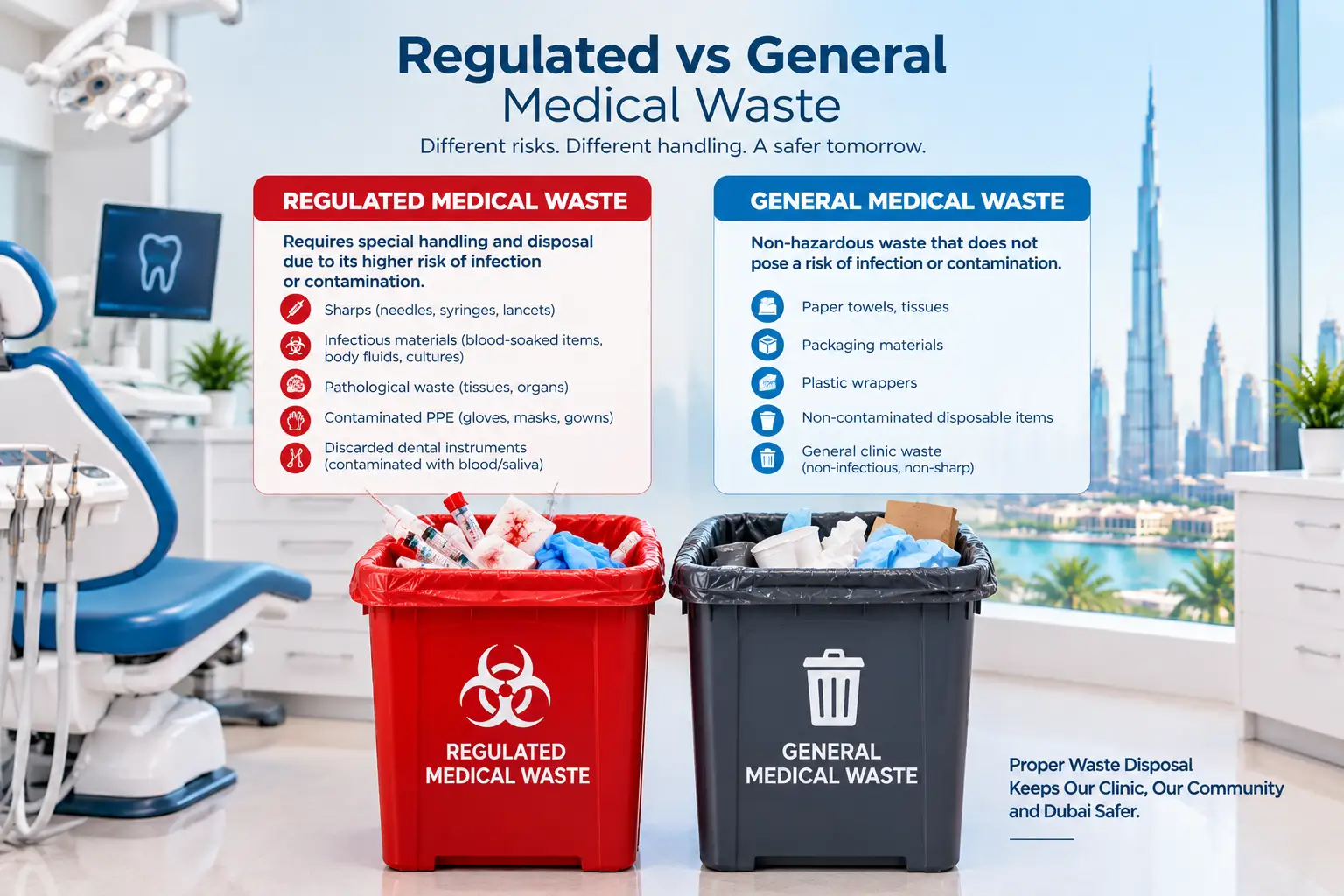
The opposite error is more dangerous. When regulated waste slips into a general bin — a sharp in the office bin, a contaminated dressing in general waste — it exposes cleaners, collection crews and the public to infection and injury, and it's a direct compliance failure that inspectors treat seriously. As the generator, the clinic carries the liability. Under-classification is never worth the saved bag.
Right-sizing your waste streams
The goal is precision, not caution in one direction. Achieve it by segregating at the point of generation with the correct container for each stream, signage that makes the right bin obvious, staff trained on what is genuinely regulated versus general, and a periodic check of what's actually going into your yellow bags. A quick audit of one week's regulated waste usually reveals a meaningful share that was simple general waste — and correcting it lowers both volume and cost without touching your compliance.
Getting the split right with the right collector
A good medical waste partner does more than haul bags away — it helps you classify correctly so you treat only what needs treating, and it documents the regulated stream end to end. Look for active HWTV transport permits, approved vehicles and treatment at DM-approved facilities, with paperwork returned to you.
Dotless Green Environmental Services works with Dubai clinics and hospitals to segregate accurately and manage the regulated stream from collection to treatment — transporting under active HWTV permits (HWTV-181225-02457, HWTV-311025-02400, HWTV-160725-02237) on RASID-registered vehicles, treating at approved facilities, and returning documentation. Across 500+ medical waste clients and 1,000+ clinics, the pattern is consistent: get the regulated-versus-general line right, and clinics stay compliant while treating only what genuinely requires it.
Soft CTA: If you suspect your yellow bags are carrying general waste, the Dotless team can help you right-size your streams — talk to us about a segregation review.
Frequently Asked Questions
What is regulated medical waste?
Any medical waste that is infectious, sharp, pharmaceutical, chemical or otherwise hazardous — waste that can infect, injure or contaminate and therefore needs licensed transport and specialist treatment.
What's the difference between regulated and general medical waste?
Regulated waste is hazardous and needs specialist treatment at an approved facility; general waste is non-contaminated material that follows the ordinary municipal route.
Why does over-classifying waste cost more?
Regulated waste requires permitted transport and specialist treatment, which cost more than general waste handling. General items placed in regulated bags pay that premium unnecessarily.
Is it dangerous to put regulated waste in a general bin?
Yes. It exposes cleaners, collection crews and the public to infection or injury and is a direct compliance failure for which the clinic, as generator, is liable.
How can a clinic reduce medical waste cost without cutting compliance?
By segregating accurately at the point of generation so only genuinely hazardous waste enters the regulated stream — a one-week audit usually reveals mis-sorted general waste.
Who decides what's regulated in Dubai?
Classification follows Dubai Municipality and DHA requirements for healthcare waste. A licensed collector like Dotless Green Environmental Services can help you map your streams correctly.
Related posts
Pharmacy Waste Management in Dubai

How to Choose a Medical Waste Company in Dubai

Dental Clinic Waste Disposal in Dubai: Full Guide
Ready to get it done?
Tell us what you need and we'll help you find the right service.