
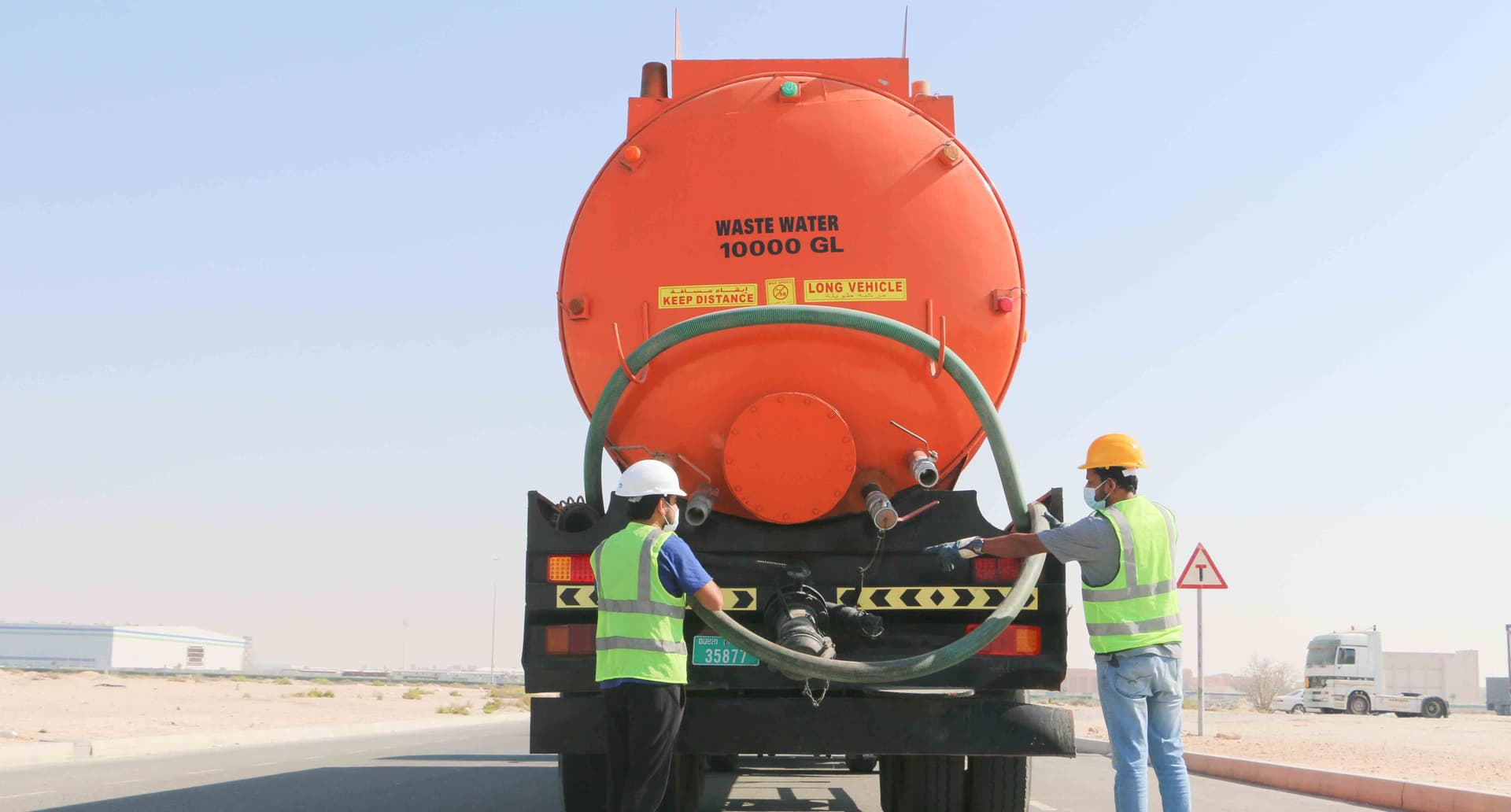
How Often Should You Empty a Sewage Tank in Dubai?
Most Dubai property managers know they need to empty their sewage tank. What they are less certain about is how often — and the answer is not one-size-fits-all. Unlike water tank cleaning, which Dubai Municipality mandates every six months without exception, sewage tank emptying frequency depends on several variables specific to your property.
Get the frequency wrong in either direction and the consequences are significant. Empty too rarely and you risk overflow, backflow into the building, foul odours, pest attraction, and a Dubai Municipality violation. Empty too frequently and you are spending more than you need to on a service your tank does not yet require.
This guide gives you the practical frequency guidelines that property managers across Dubai use to schedule sewage tank emptying properly — by property type, tank size, and occupancy level.
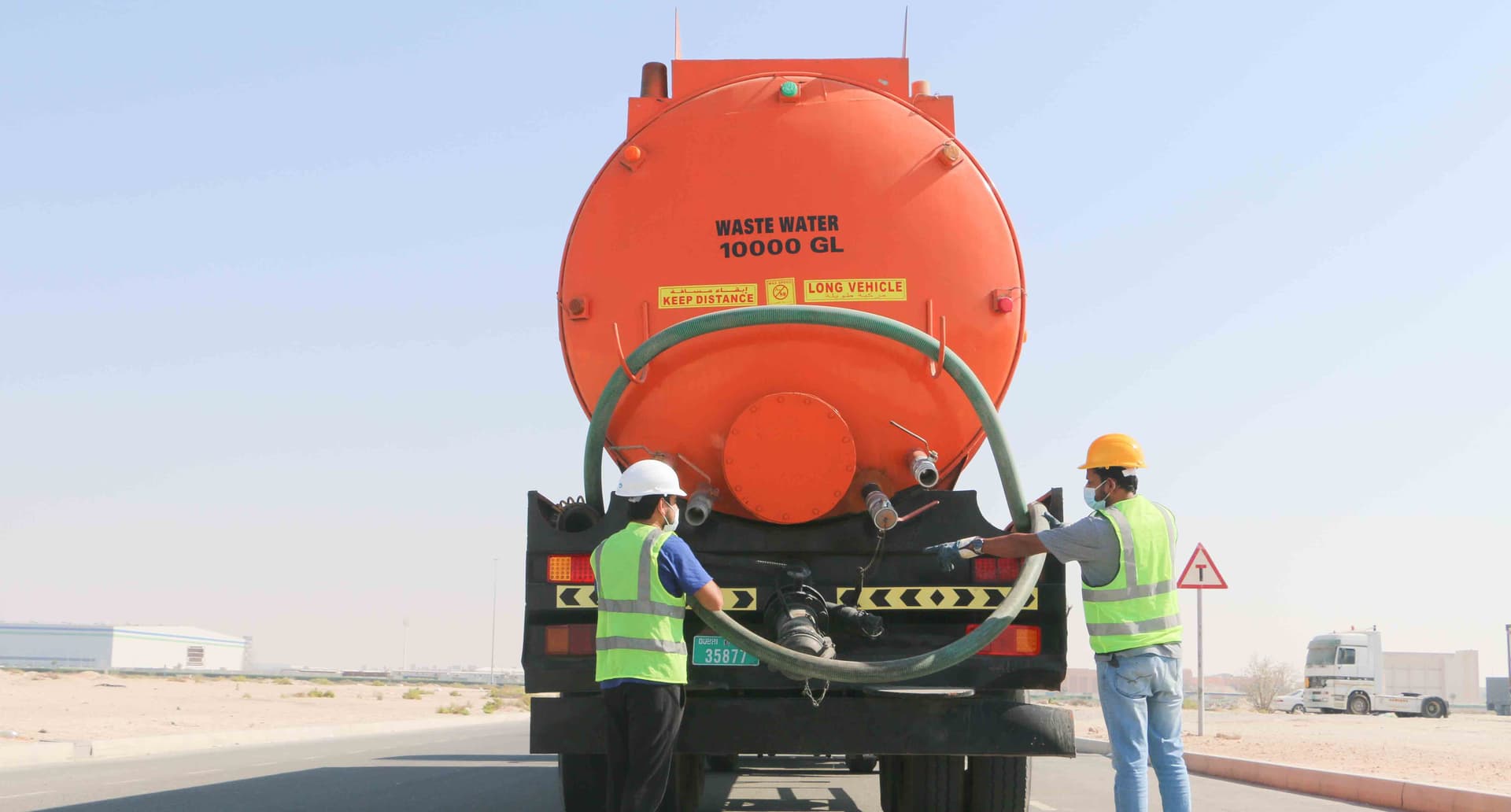
Why Sewage Tank Emptying Frequency Matters in Dubai
Dubai's climate accelerates decomposition inside sewage tanks. High ambient temperatures speed up bacterial activity, which produces hydrogen sulphide gas faster than in cooler climates — the same gas responsible for the rotten egg smell that signals an overfull or neglected tank.
When a sewage tank is not emptied on schedule, the following chain of events becomes almost inevitable:
Liquid levels rise toward the inlet pipe, causing backflow into the building drainage system
Solid sludge accumulates at the base of the tank, reducing effective storage capacity over time
Gas pressure builds inside the tank, forcing odours back through drain points and inspection covers
Overflow risk increases — sewage reaching ground level is a Dubai Municipality violation and a public health hazard
Emergency pumping at short notice costs significantly more than a planned, scheduled collection
Regular scheduled emptying prevents all of these. It also extends the operational life of the tank itself by preventing sludge hardening on the base and walls.
General Frequency Guidelines by Property Type
There is no single mandated emptying interval for sewage tanks in Dubai the way there is for water tanks. Frequency is determined by usage volume. Use the following as your baseline:
Residential Villas and Private Properties
Recommended frequency: every 3 to 6 months
A villa occupied by a family of four to six people with a standard tank size will typically require emptying every three to four months during normal occupancy. Larger families, frequent guests, or smaller tanks push this toward monthly or bi-monthly.Apartment Buildings and Residential Towers
Recommended frequency: monthly to quarterly depending on occupancy
High-occupancy residential buildings connected to holding tanks rather than direct municipal sewage lines require more frequent emptying. Monthly pumping is standard for fully occupied mid-rise buildings.Labour Camps and Accommodation Facilities
Recommended frequency: weekly to monthly
Labour camps generate the highest sewage volume per tank relative to site size. Weekly pumping is common for large camps. Facilities that allow tanks to exceed 75% capacity risk overflow and compliance action from Dubai Municipality.Hotels and Serviced Apartments
Recommended frequency: monthly minimum
Hotel sewage loads vary with occupancy. A fully booked hotel with restaurant facilities and laundry operations can fill holding tanks rapidly. Monthly scheduled emptying with capacity monitoring is the standard approach for hospitality properties.Restaurants and Food and Beverage Outlets
Recommended frequency: bi-weekly to monthly
Commercial kitchens generate high-volume waste discharge. Combined with grey water from dishwashing and food preparation, F&B outlets require more frequent emptying than standard commercial properties.Offices and Commercial Properties
Recommended frequency: every 3 to 6 months
Office buildings with standard sanitary usage and moderate occupancy typically require emptying on a quarterly basis. High-occupancy commercial towers may need more frequent scheduling.Construction Sites and Temporary Facilities
Recommended frequency: as needed, typically weekly
Portable sewage tanks and temporary holding facilities on active construction sites require monitoring and emptying based on workforce size and site activity. Weekly pumping is common during peak construction phases.

The 75% Rule — The Practical Trigger Point
Regardless of the schedule above, the most reliable trigger for sewage tank emptying is volume — not calendar date. Industry practice across Dubai's facility management sector uses the 75% capacity mark as the standard pumping trigger.
When a tank reaches 75% of its total capacity, it should be scheduled for emptying before the next usage cycle pushes it toward overflow. Waiting until a tank is full before booking a pumping service leaves no margin for delays, increased demand on pumping schedules, or unexpected usage spikes.
If you do not have a float sensor or level monitoring system installed, a scheduled inspection every four to six weeks by your maintenance team or service provider is the practical alternative.
Does Dubai Municipality Regulate Sewage Tank Emptying Frequency?
Dubai Municipality does not publish a single mandatory emptying interval for all sewage holding tanks the way it does for water tanks. However, DM environmental health inspections cover sewage system condition and overflow risk — and a tank found to be overfull, leaking, or causing a public health hazard during an inspection will result in a compliance notice and potential fine.
Properties connected to Dubai Municipality's sewerage network are not affected by this guide — sewage flows directly to the network without holding. This applies specifically to properties operating independent sewage holding tanks, typically in areas without direct sewerage connection or where the building's drainage system uses a holding tank as an intermediate collection point.
If you are unsure whether your property uses a holding tank or a direct sewerage connection, your building engineer or facilities management team will have this on the building's drainage schematics.
How to Set Up a Scheduled Sewage Emptying Programme
The most cost-effective approach to sewage tank management is a scheduled programme rather than reactive call-outs. Reactive pumping — called in when the tank is already full or overflowing — typically costs more, disrupts building operations, and creates compliance risk.
A scheduled programme involves:
Agreeing a pumping frequency based on your property type and occupancy
Booking recurring service slots with a licensed sewage tanker provider
Receiving a service record after each emptying for your maintenance and compliance files
Adjusting frequency up or down based on occupancy changes across the year
Dotless Cleaning Services L.L.C provides scheduled sewage tank emptying across Dubai with RASID-registered, GPS-tracked tankers. We service villas, residential buildings, labour camps, hotels, and commercial properties — on a one-time or recurring schedule, with service documentation provided after every collection.
Key Takeaways
Empty residential sewage tanks every 3 to 6 months as a baseline — more frequently with higher occupancy
Labour camps and hotels should schedule monthly or more frequent emptying
Use 75% tank capacity as your practical trigger point regardless of schedule
Watch for slow drains, odours, and gurgling sounds as early warning indicators
Reactive emergency pumping is more expensive and more disruptive than planned scheduled emptying
Keep service records from every pumping for Dubai Municipality compliance files
Need a waste collection? We dispatch same-day.
Book a scheduled sewage tank emptying with Dotless — one-time or recurring service across Dubai.