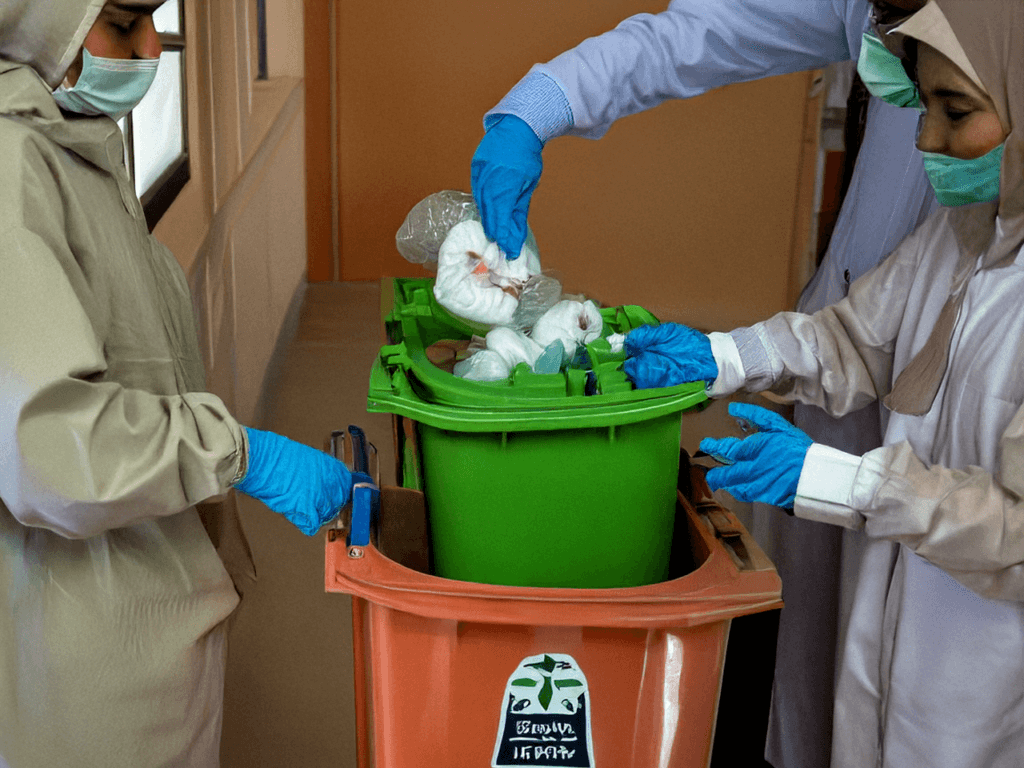
Biohazard waste — also written as bio-hazardous waste or biological hazard waste — is a broad category. It covers any waste material that contains or has been contaminated by biological agents that pose a potential risk to human health, animal health, or the environment.
The key word is potential. Biohazard waste includes material that could cause harm under the right conditions — even if that harm is not guaranteed in every instance of exposure.
Common examples of biohazard waste in Dubai healthcare and laboratory settings:
Used personal protective equipment contaminated with blood or bodily fluids
Laboratory cultures, specimens, and microbiological waste
Human tissues, organs, and pathological waste from surgical procedures
Blood and blood products — liquid or dried
Animal carcasses and tissues used in research
Contaminated linens, gloves, and single-use clinical items
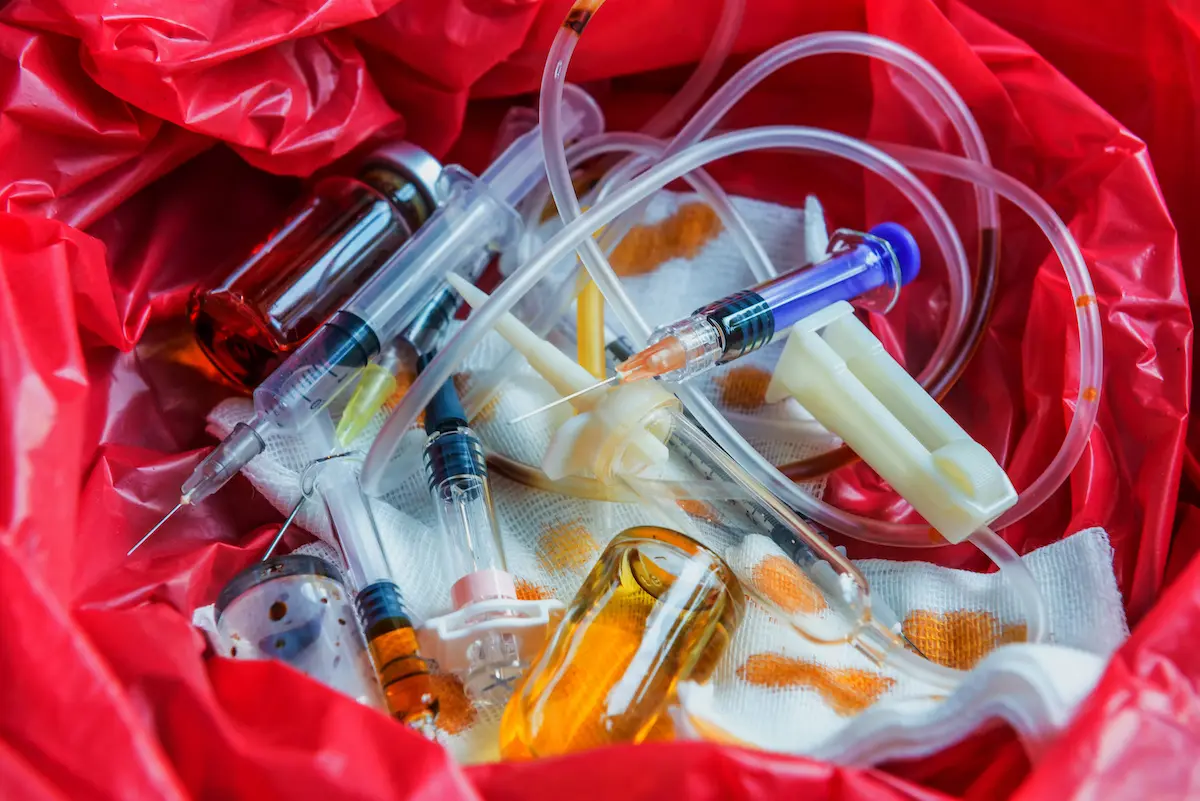
Sharps that have contacted biological material
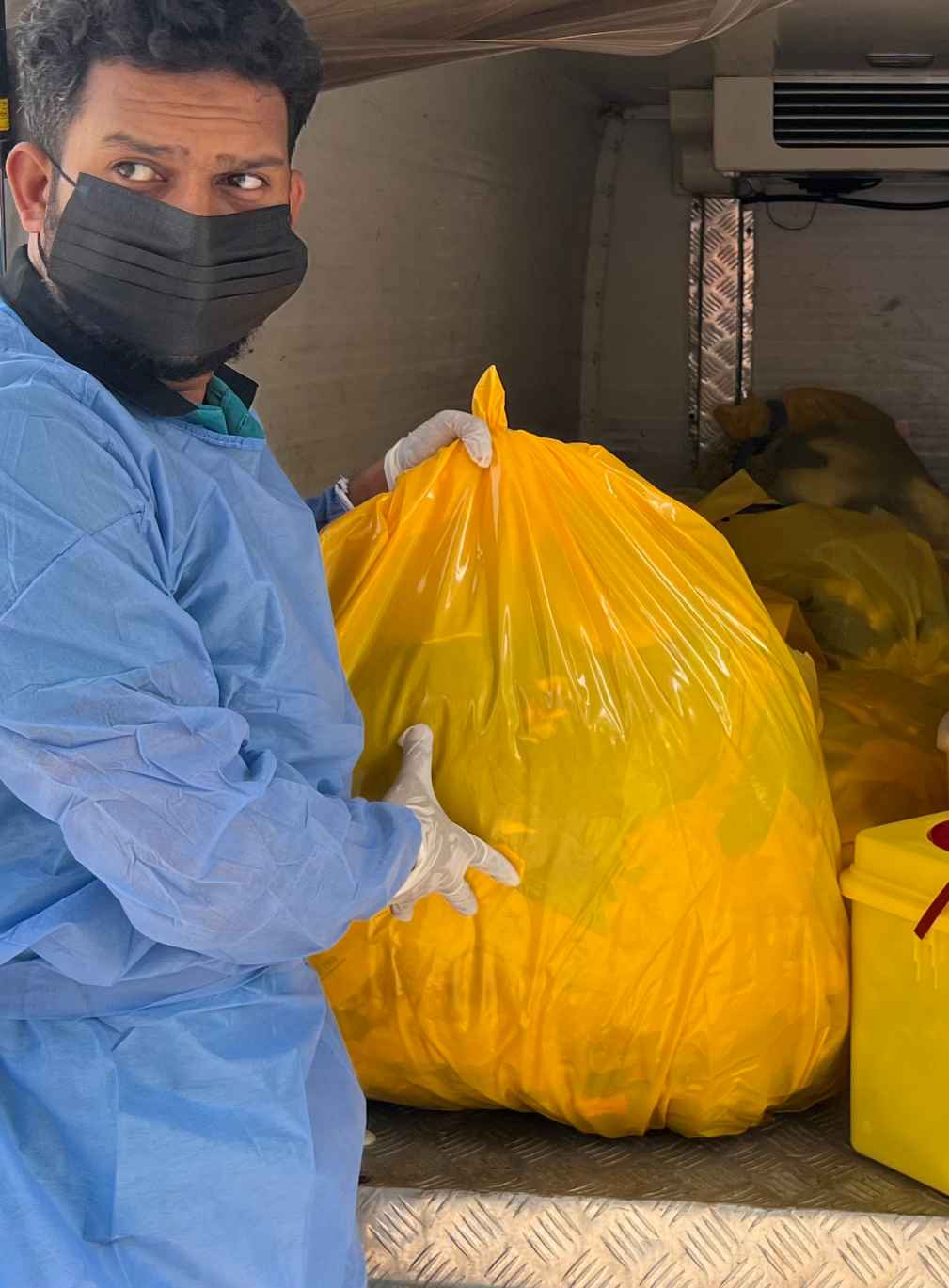
The biohazard symbol — the universal orange-red trefoil — is applied to containers holding this category of waste. In Dubai facilities, yellow bags and red rigid containers are the standard primary containment for biohazardous waste, depending on the specific waste stream.
Biohazard Waste vs Infectious Waste in Dubai: Key Differences
Biohazard Waste vs Infectious Waste in Dubai — What Is the Actual Difference?
Here is a misconception that runs through almost every clinic, laboratory, and hospital in Dubai:
biohazard waste and infectious waste mean the same thing. They do not. The two terms are related, they overlap significantly, and they are often used interchangeably in everyday conversation — but they describe different categories with different regulatory implications under Dubai Municipality waste management guidelines.
Getting this distinction wrong does not just cause confusion during waste segregation. It causes incorrect labelling, wrong container selection, compliance failures during DHA and Dubai Municipality inspections, and in some cases, exposure risk for waste handlers who are treating low-risk material as high-risk or — more dangerously — the reverse.
This post clarifies both terms, shows where they overlap, and explains what each classification means for waste management at your facility in Dubai.
What Is Biohazard Waste?
Biohazard waste — also written as bio-hazardous waste or biological hazard waste — is a broad category. It covers any waste material that contains or has been contaminated by biological agents that pose a potential risk to human health, animal health, or the environment.
The key word is potential. Biohazard waste includes material that could cause harm under the right conditions — even if that harm is not guaranteed in every instance of exposure.
Common examples of biohazard waste in Dubai healthcare and laboratory settings:
Used personal protective equipment contaminated with blood or bodily fluids
Laboratory cultures, specimens, and microbiological waste
Human tissues, organs, and pathological waste from surgical procedures
Blood and blood products — liquid or dried
Animal carcasses and tissues used in research
Contaminated linens, gloves, and single-use clinical items
Sharps that have contacted biological material
The biohazard symbol — the universal orange-red trefoil — is applied to containers holding this category of waste. In Dubai facilities, yellow bags and red rigid containers are the standard primary containment for biohazardous waste, depending on the specific waste stream.
What Is Infectious Waste?
Infectious waste is a subset of biohazard waste. It is more specific. Infectious waste is defined as waste that contains pathogens — bacteria, viruses, parasites, or fungi — in sufficient quantity and form to cause disease in healthy humans upon exposure.
The distinction is the confirmed presence of a disease-causing agent at a concentration capable of transmission. Not just biological contamination in general — active pathogens at infectious doses.
Common examples of infectious waste in Dubai healthcare settings:
Cultures and stocks of infectious agents from microbiology laboratories
Waste from patients in isolation with confirmed communicable diseases
Dialysis waste — tubing, filters, disposable towels, and gloves from patients with bloodborne infections
Used sharps from patients with confirmed infectious conditions
Blood and bodily fluids from infected patients — not all blood, specifically from confirmed infectious cases
Biological waste from post-mortem examinations of infectious disease cases
Infectious waste carries the highest biological risk within the broader biohazard category and requires the most stringent handling, containment, and disposal protocols.
Where the Two Categories Overlap
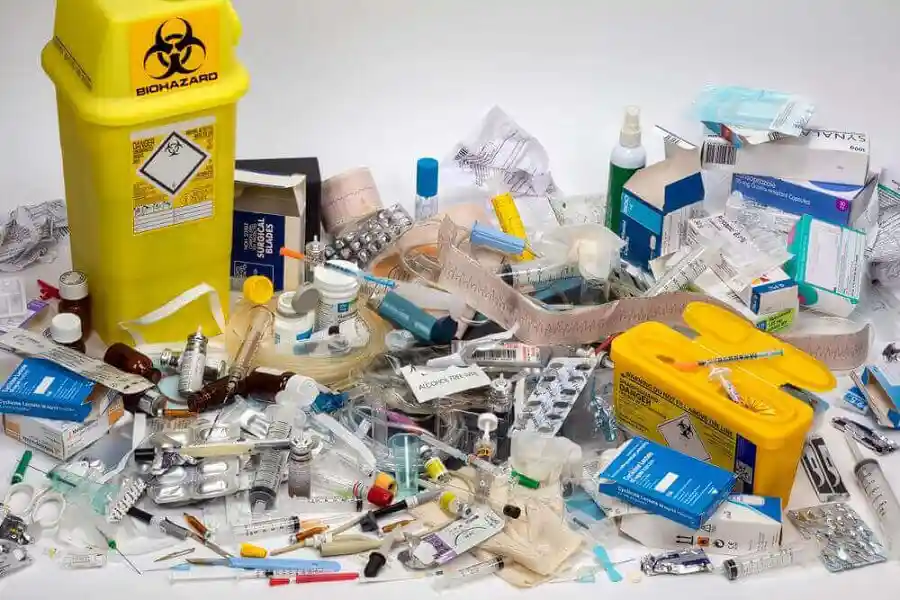
Most infectious waste is also biohazardous. A used needle from a patient with hepatitis B is both — it is a biological hazard and it contains an active pathogen at infectious concentration.
But not all biohazard waste is infectious. A used glove that contacted a sterile surgical site carries a biological hazard classification because of its material and context, but it does not necessarily contain active pathogens capable of transmitting disease to a healthy person. It goes into a yellow biohazard bag — but it is not infectious waste in the strict regulatory sense.
This is where the practical segregation challenge lies. In a busy clinical environment, the question staff must ask at the point of waste generation is not just "is this biological?" but "does this contain confirmed or highly probable infectious agents?"
The answer determines the containment, labelling, and disposal pathway.
How Dubai Municipality Classifies These Waste Streams
Dubai Municipality's waste management framework categorises healthcare waste under specific codes that align with international classifications including WHO and Basel Convention guidelines.
Under DM's medical waste classification:
Category A — Infectious Waste
Waste known or reasonably expected to contain pathogens capable of causing disease. Requires collection in sealed, leak-proof, puncture-resistant containers. Must be transported in licensed RASID-registered vehicles. Disposal via high-temperature incineration or validated autoclave sterilisation at an authorised facility.Category B — Pathological Waste
Human tissues, organs, body parts, and fluids. Includes foetal remains. Disposal via incineration — not autoclave.Category C — Sharps
Needles, scalpels, lancets, blades, and broken glassware that have contacted biological material. Rigid yellow sharps containers. High-temperature incineration.Category D — Pharmaceutical Waste
Expired, unused, and contaminated medicines. Separate collection and disposal pathway — not co-mingled with infectious or biohazard waste.Category E — Chemical Waste
Laboratory chemicals, disinfectants, and reagents. Hazardous waste disposal pathway under separate permit.
Biohazard waste as a general classification sits primarily under Categories A, B, and C. Infectious waste maps specifically to Category A. A Dubai healthcare facility that conflates all biohazard waste with Category A infectious waste protocols will over-classify and overspend on disposal. A facility that fails to classify genuine infectious waste as Category A will under-comply and face inspection penalties.
Practical Segregation — What This Means at Your Facility
Biohazard waste (general):
Yellow bags for non-sharp biohazardous material — PPE, dressings, single-use clinical items
Yellow rigid containers for sharps
Collected under your medical waste management contract
Transported by a licensed medical waste collector with HWTV permit
Infectious waste (Category A):
Must be double-bagged or placed in sealed rigid containers
Clearly labelled with biohazard symbol and "INFECTIOUS WASTE" marking
Cannot be stored on-site beyond Dubai Municipality time limits for infectious waste
Transported only in vehicles with specific hazardous waste transport vehicle permits
Disposal only via incineration — autoclave is not acceptable for all infectious waste streams
Staff training on segregation at source is the single most important factor in getting this right. Incorrect segregation — placing infectious waste in general biohazard streams or vice versa — creates both compliance risk and unnecessary exposure risk for waste handlers downstream.
Common Mistakes Dubai Healthcare Facilities Make
Key Takeaways
Biohazard waste is a broad category covering any material with biological hazard potential
Infectious waste is a specific subset — waste containing active pathogens at disease-transmissible concentrations
All infectious waste is biohazardous — not all biohazard waste is infectious
Dubai Municipality classifies infectious waste as Category A with the most stringent handling and disposal requirements
Correct segregation at source protects staff, reduces disposal costs, and maintains compliance
Documentation is mandatory for every collection of healthcare waste in Dubai
Need a waste collection? We dispatch same-day.
Related posts
Pharmacy Waste Management in Dubai
How to Choose a Medical Waste Company in Dubai
Regulated vs General Medical Waste: Dubai Guide
Ready to get it done?
Tell us what you need and we'll help you find the right service.