
Industrial Sewage Tank Cleaning at a Dubai Food Factory — What Happens When It's Left Too Long
A Dubai Municipality food safety inspection covers more than production lines and storage areas. Inspectors assess the full hygiene picture of a food processing facility — including drainage systems, wastewater infrastructure, and sewage holding tanks that accumulate organic waste, fats, cleaning chemicals, and biological material from across the entire operation.
When a food factory's sewage holding tank has not been professionally cleaned for an extended period, the condition inside is not just a maintenance issue. It is a direct compliance risk — and the photos in this case study show exactly what that looks like.
In July 2026, Dotless Cleaning Services LLC completed a full sewage holding tank clean at Perfect Food Factory LLC, Dubai Industrial City. This is the documented before and after.
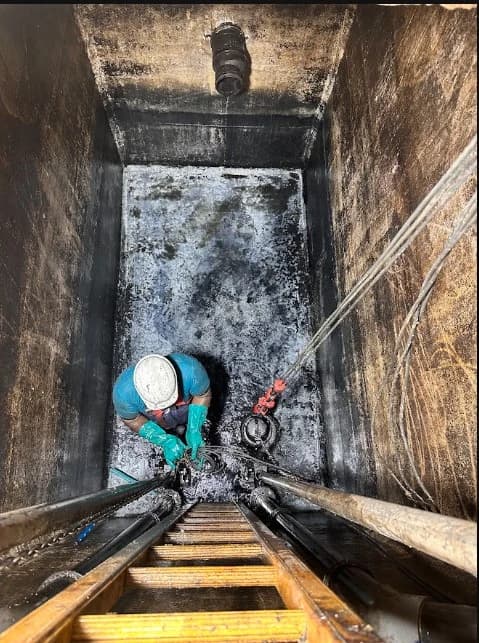
Project Overview
Client: Perfect Food Factory LLC
Location: Dubai Industrial City (DIC), Dubai
Service: Industrial sewage holding tank cleaning
Team: 1 Supervisor + 5 Technicians
Date of service: 26 July 2026
Service completion time: 5:00 PM — 8:00 PM (3 hours)
Contractor: Dotless Cleaning Services LLC (Licence No. 1365142)
What Was Found Inside the Tank
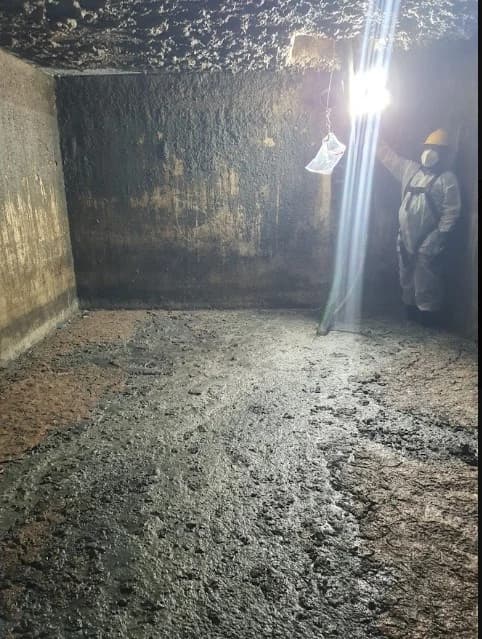
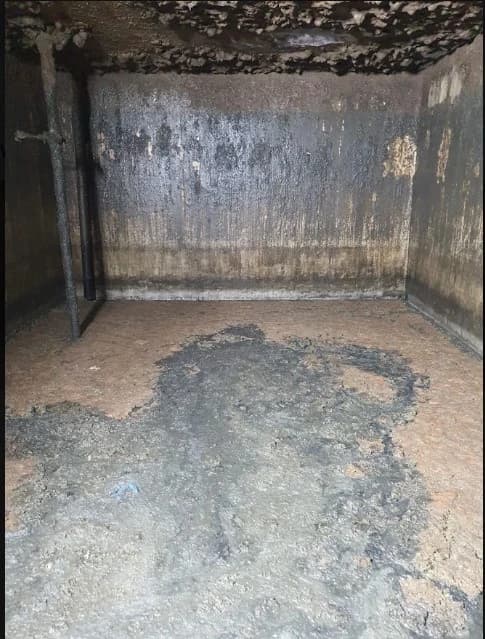
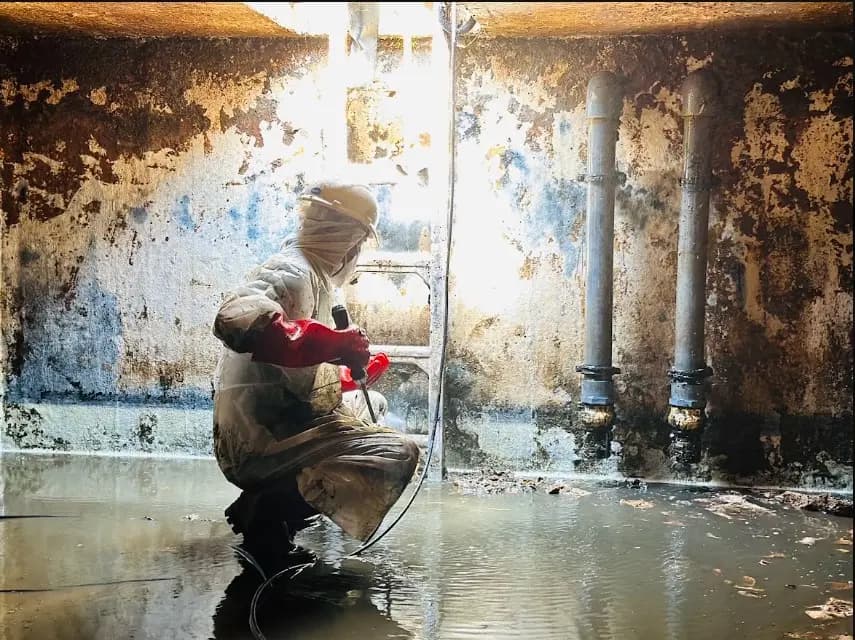
The tank interior showed heavy anaerobic sludge accumulation covering the entire floor surface and adhering to the lower walls. The black colouration is consistent with hydrogen sulphide-producing anaerobic bacterial activity — the breakdown of organic food waste, fats, oils, and biological material under oxygen-depleted conditions over an extended accumulation period.
In a food processing facility, the sewage holding tank collects drainage from across the entire operation — production floor washdowns, kitchen and canteen waste, staff facilities, and cleaning chemical runoff. Each of these streams contributes a different fraction to the sludge layer: fats and oils from production, food solids from floor drainage, chemical residues from cleaning operations, and biological matter. Without regular professional cleaning, these fractions compact into a dense, adherent layer that standard draining cannot remove.
The specific risks created by this condition in a food factory environment go beyond the holding tank itself. Hydrogen sulphide gas produced by anaerobic decomposition is both toxic at concentration and a serious structural corrosion agent for concrete and metal tank components. Blocked or partially blocked drainage from sludge accumulation creates backflow risk into production floor drainage channels. And during a Dubai Municipality food safety inspection, the visual condition of a facility's sewage infrastructure forms part of the overall compliance assessment.
The Cleaning Process
Pre-Entry Safety Assessment
Before any technician entered the tank, Dotless's supervisor conducted a pre-entry assessment covering oxygen and gas level testing, ventilation adequacy, and structural condition. Tank inlet and outlet connections were locked out and tagged before entry. All six team members wore full personal protective equipment throughout the operation — coveralls, respiratory protection, gloves, and safety footwear appropriate for confined space entry in an environment with organic contamination risk.
Sludge Extraction and Mechanical Removal
The sludge layer was mechanically extracted and removed from the tank using vacuum equipment and scrapers, working systematically across the entire floor area and along the contaminated wall surfaces. All extracted material was removed from the tank for appropriate disposal.
Mechanical removal of the bulk sludge layer is the step most commonly cut short by underprepared contractors. Rushing to the chemical disinfection stage without fully extracting the physical sludge layer results in disinfectant applied over residual contamination — leaving bacteria embedded beneath the surface layer and providing a substrate for rapid recontamination.
High-Pressure Scrubbing
Following bulk sludge extraction, all interior surfaces — floor, walls, and structural components — were scrubbed using high-pressure equipment and approved cleaning chemicals to remove residual contamination adhering to the concrete surfaces. Particular attention was given to corners, wall-floor junctions, and inlet/outlet connections where sludge compaction is heaviest.
Disinfection
All surfaces were treated with disinfectant in accordance with manufacturer specifications, maintained at the required contact time to achieve effective microbial reduction across all treated surfaces.
Rinse and Final Inspection
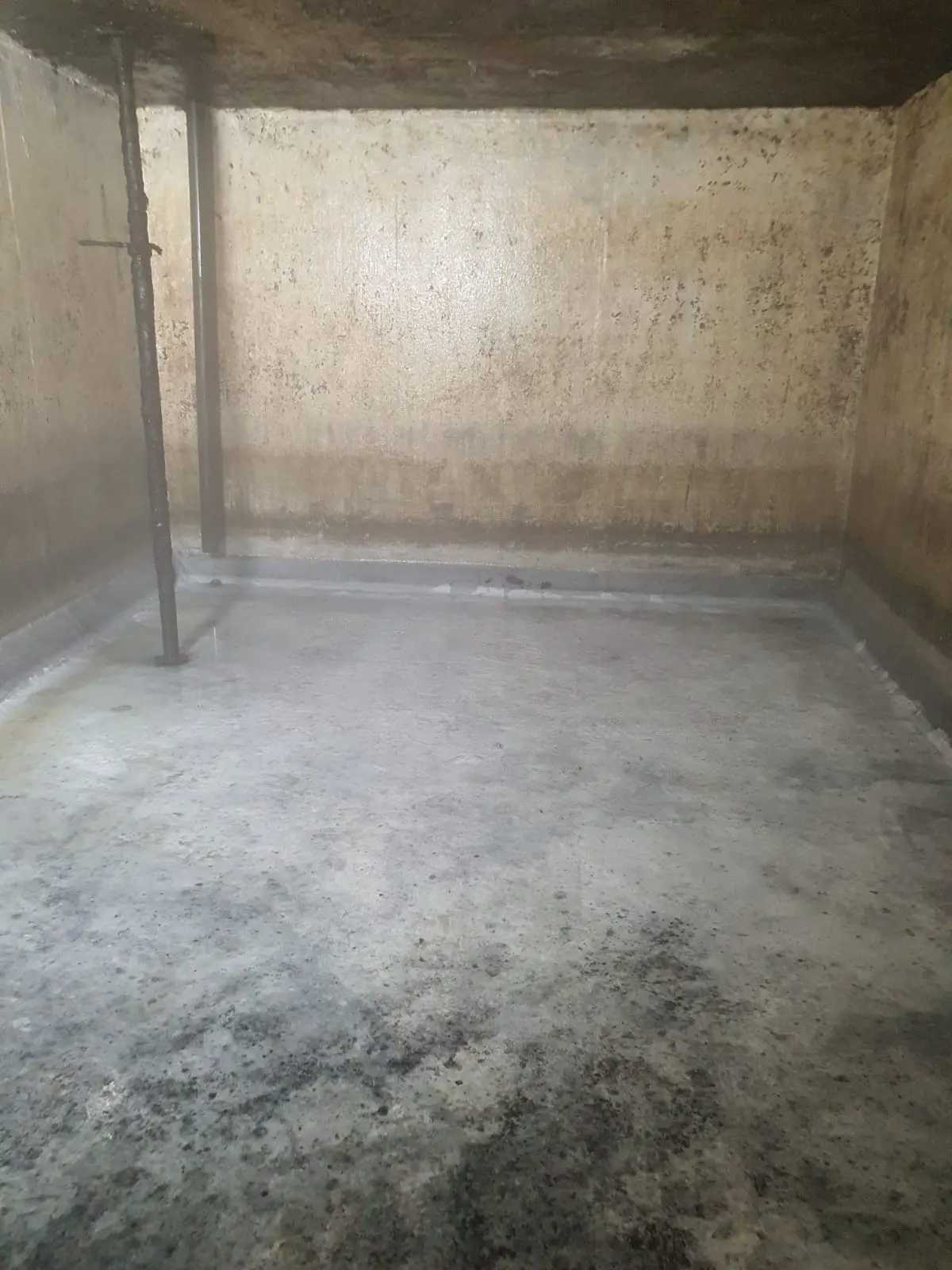
A thorough final rinse removed all cleaning chemical and disinfectant residue. The lead supervisor conducted a final internal inspection before the tank was returned to service, confirming all surfaces were clean, all structural components were in good working order, and no contamination remained.
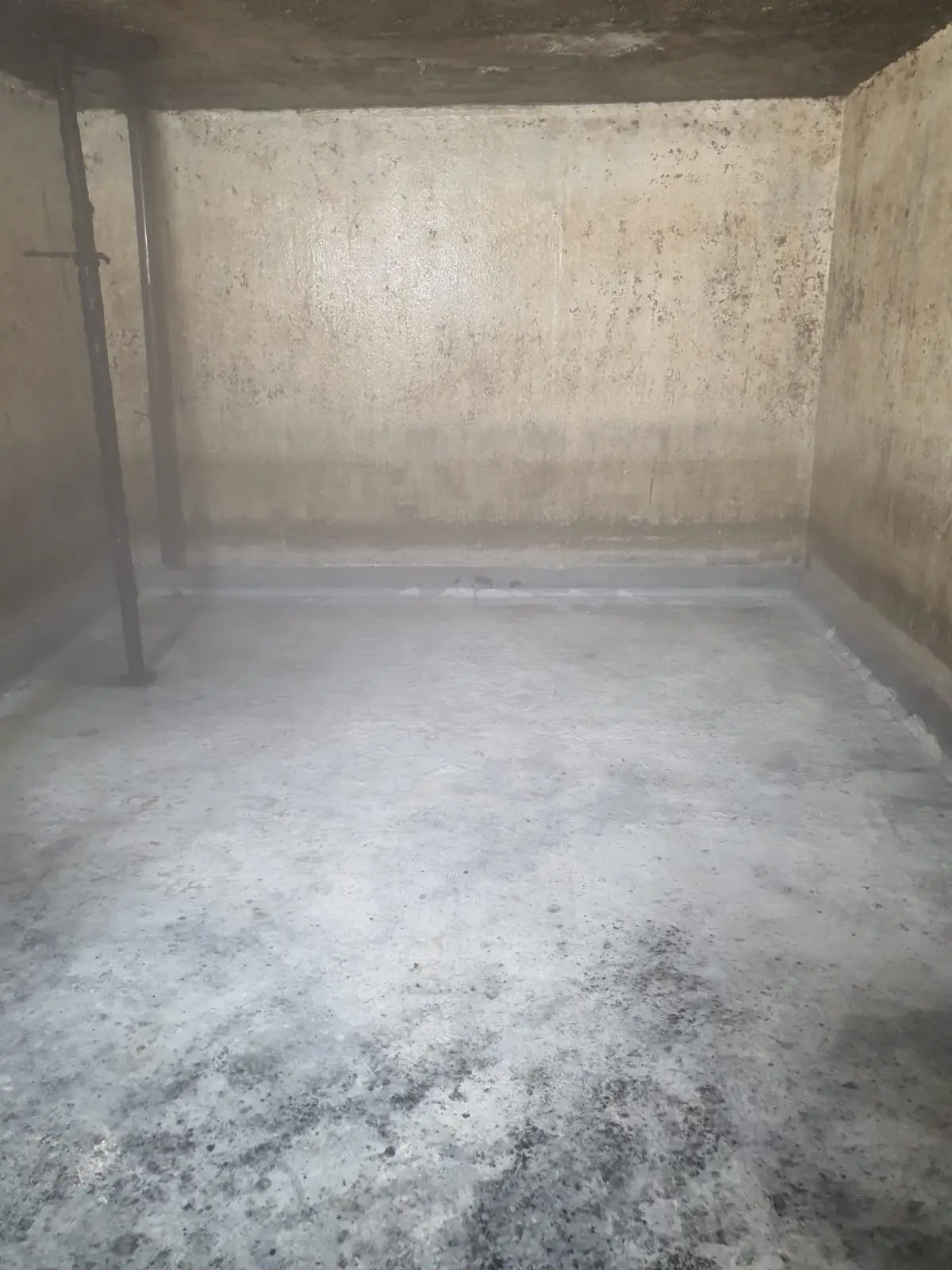
The Result — Before and After
The contrast between the before and after condition confirms complete removal of all accumulated sludge and surface contamination across the tank interior. The clean concrete surfaces are structurally sound with no active contamination remaining. The tank was confirmed in good working order before handover.
Total time from service commencement to completion: 3 hours.
Documentation Issued to Client
Dotless Cleaning Services LLC issued a Certification of Work Completion to Perfect Food Factory LLC on completion of the service, confirming the scope of work, the team deployed, the service date of 26 July 2026, and the completion time. The certificate was issued on behalf of Dotless Cleaning Services LLC under Licence No. 1365142, signed by the Sales Supervisor and bearing the official company stamp.
WORK COMPLITION FOR PERFECT FOOD TANK CLEANIMG
Grab the PDF for full details.
WORK COMPLITION FOR PERFECT FOOD TANK CLEANIMG (1).pdf
PDF · 1.3 MB
Why Food Factories in Dubai Industrial City Need Regular Tank Cleaning
Dubai Industrial City houses hundreds of food and beverage manufacturers, packaging facilities, cold storage operations, and food processing plants — all generating wastewater and sewage from their operations. Every one of these facilities has sewage infrastructure that requires periodic professional cleaning.
The accumulation rate in a food factory sewage holding tank is significantly higher than in standard commercial premises because of the organic load from production operations. Fats, oils, and greases from cooking and processing, food solids from production floor drainage, and biological waste combine to produce sludge at rates that can render a tank's effective capacity significantly reduced within months of the previous cleaning.
Dubai Municipality's food safety inspection framework assesses the hygiene condition of food processing facilities comprehensively. A sewage system in poor condition — blocked, odorous, or visually contaminated — is a finding that can affect a facility's food safety compliance status regardless of how well the production lines themselves are maintained.
Dotless Cleaning Services provides industrial sewage tank and holding tank cleaning for manufacturing facilities, food factories, and industrial operations across Dubai — including Dubai Industrial City, Jebel Ali Free Zone, Dubai Investment Park, Al Quoz Industrial Area, and Dubai South.
Frequently Asked Questions
Everything you need to know about our services.
The appropriate interval depends on the production volume of the facility and the capacity of the holding tank. High-volume food production facilities accumulate sludge significantly faster than standard commercial premises. As a baseline, industrial holding tanks in active food production facilities should be inspected and cleaned at minimum every 6 months, with higher-volume operations requiring quarterly cleaning. The condition found in this job — heavy accumulation across the entire tank floor — is consistent with an extended period beyond the recommended interval.
Need a waste collection? We dispatch same-day.
Dotless Cleaning Services LLC (Licence No. 1365142) provides professional industrial sewage tank and holding tank cleaning for food factories, manufacturing facilities, and industrial operations across Dubai. If your facility is due for a scheduled tank clean or requires an urgent service, contact the Dotless team to arrange an assessment