
The Brief: Safe Water, Proven on Paper
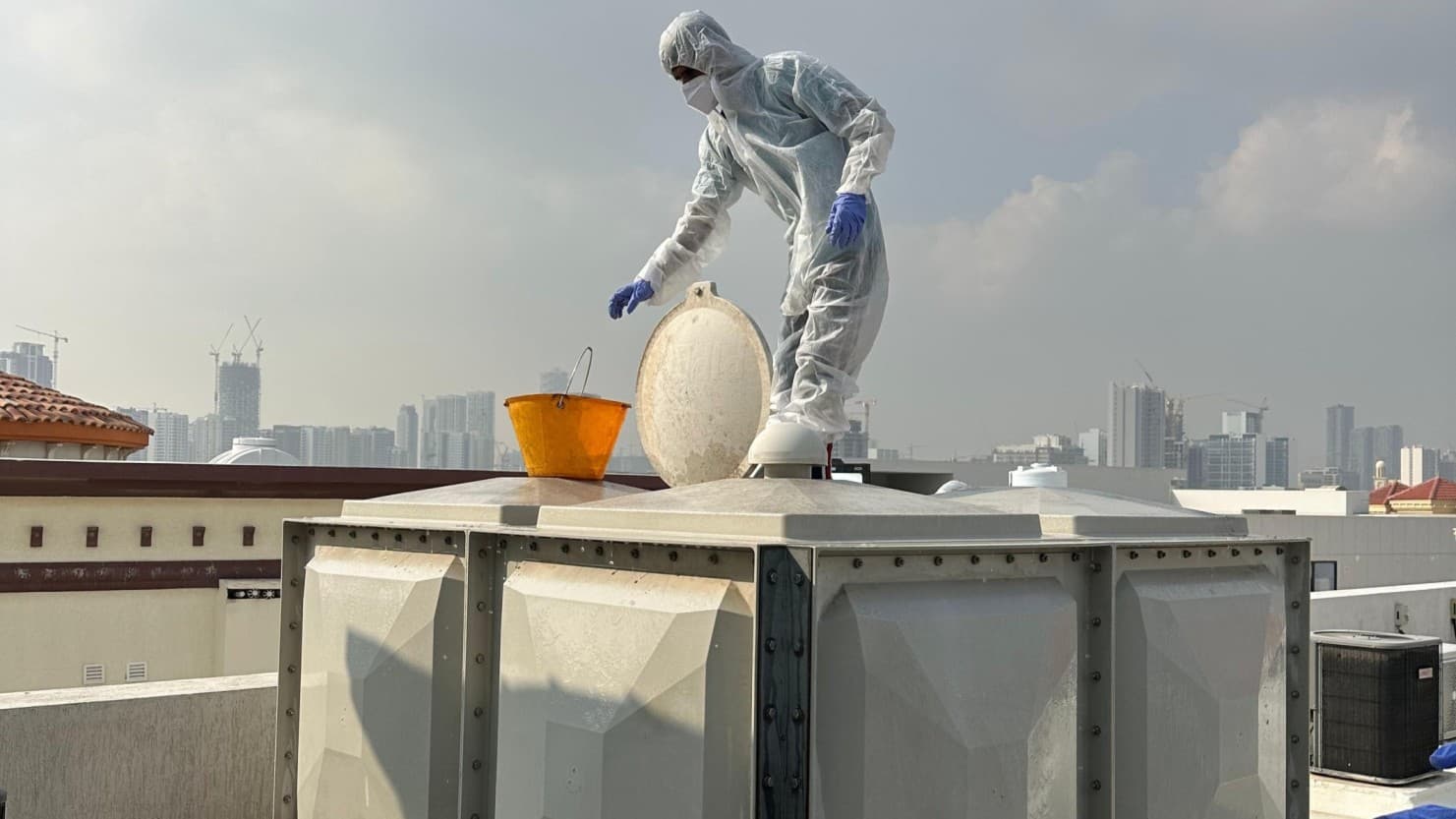
A contractor running a maintenance building in Dubai South needed its domestic water tanks cleaned and water tank disinfected. The real requirement went beyond scrubbing a tank: the water feeding the building’s washrooms and supply points had to be demonstrably safe, with readings to back it up. For a facility operator, that documentation isn’t a nice-to-have — it’s what proves due diligence if anyone ever asks whether the building’s water was handled properly.
More information
So the job had three parts: clean the tanks, disinfect the system, and verify — with measured chlorine readings — that the water was returned to a safe, usable state.
Why Cleaning Alone Isn’t The Whole Job
A tank can look clean and still hold water that isn’t. Sediment, biofilm and stagnation build up on walls and floors and in the supply lines, and scrubbing the tank without disinfecting the system leaves the problem half-solved. That’s why this job treated cleaning, chlorination and de-chlorination as one continuous process — each step verified before moving to the next — rather than a quick wash and refill.
The Work, Step By Step
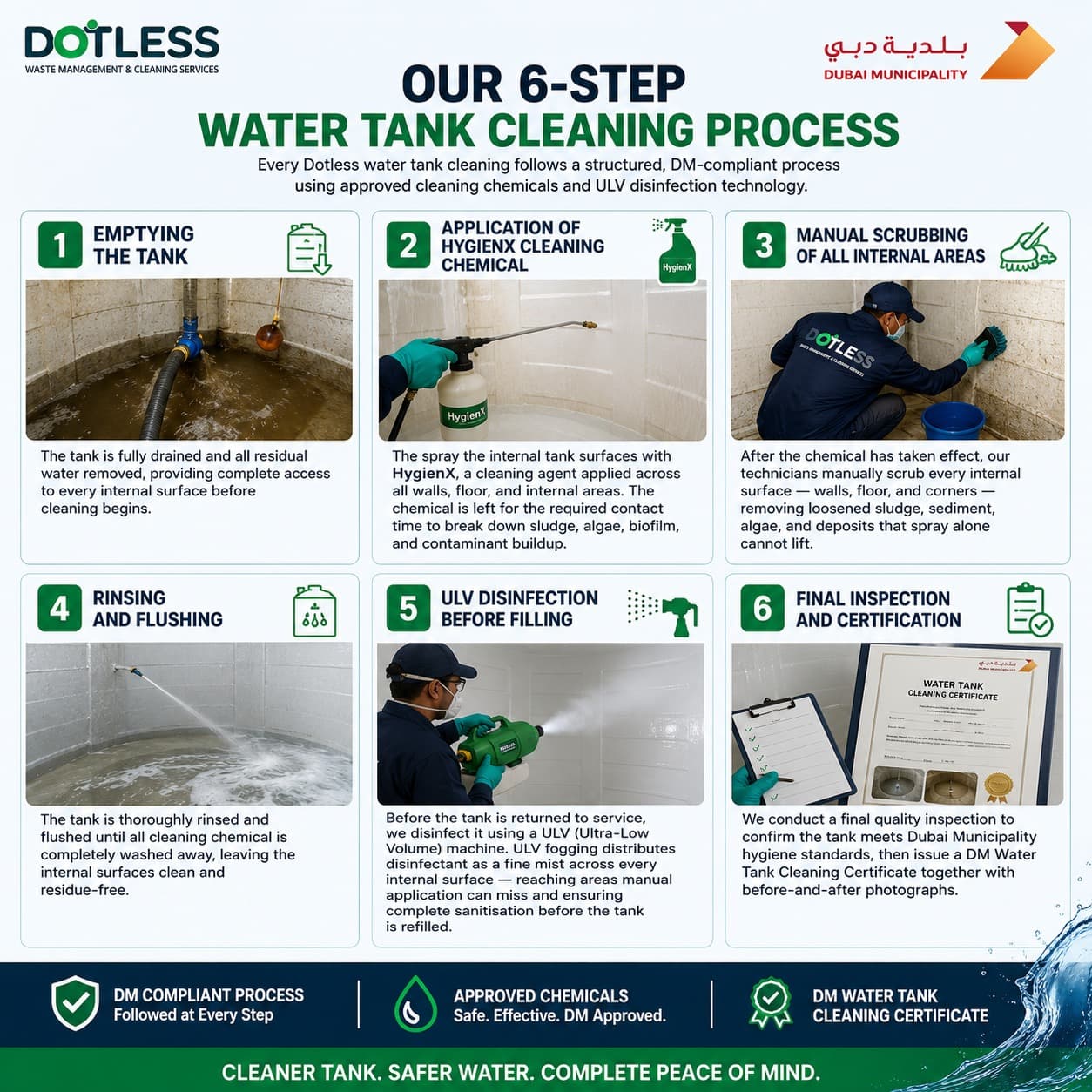
Inspection
The tanks were visually inspected for scale, corrosion, sludge, algae and signs of stagnation, and the lids, screens and valves checked.
Confined-space preparation
Inlets and outlets were locked out and tagged, the tank vented, and oxygen and gas levels tested with a gas meter before any entry.
Cleaning
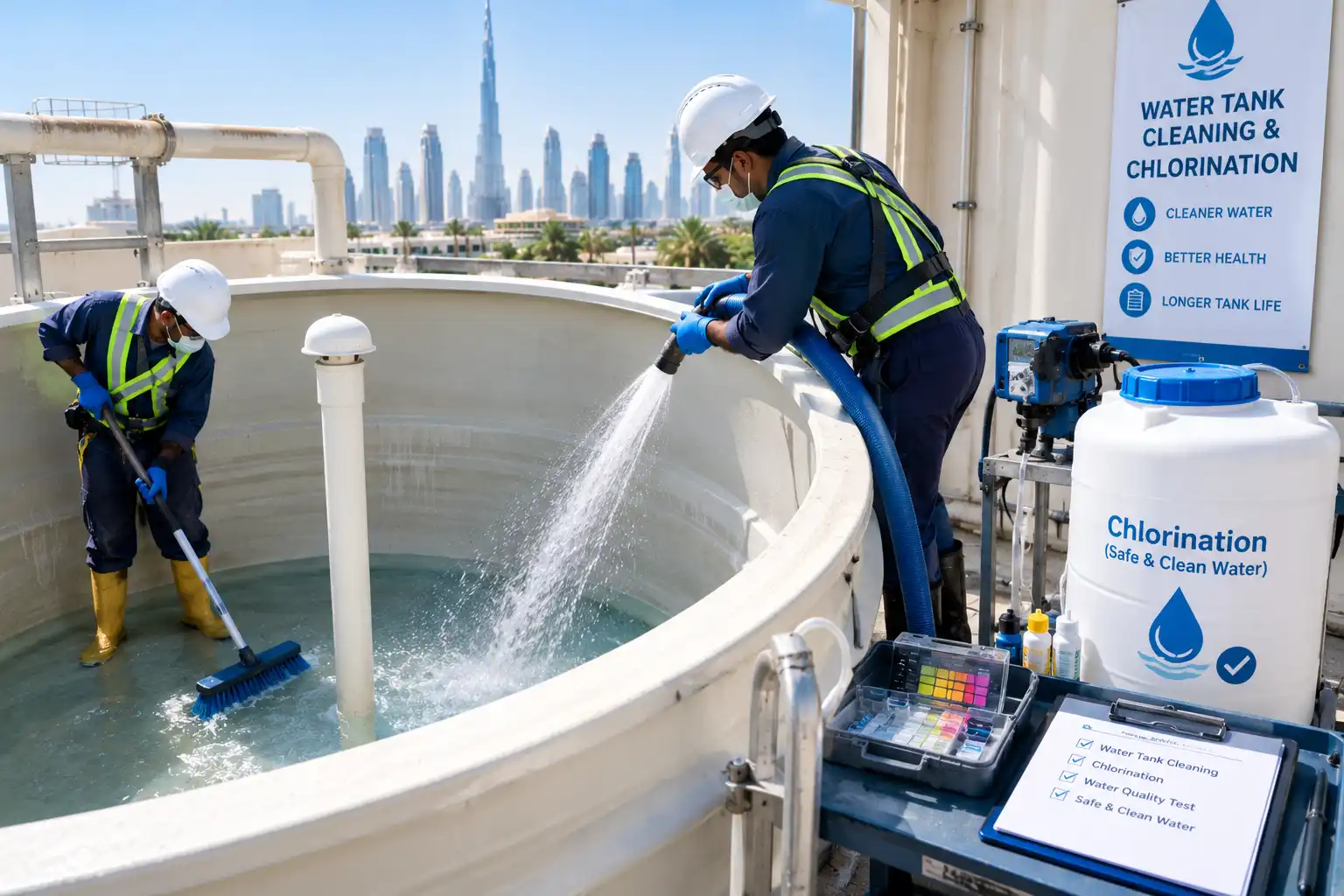
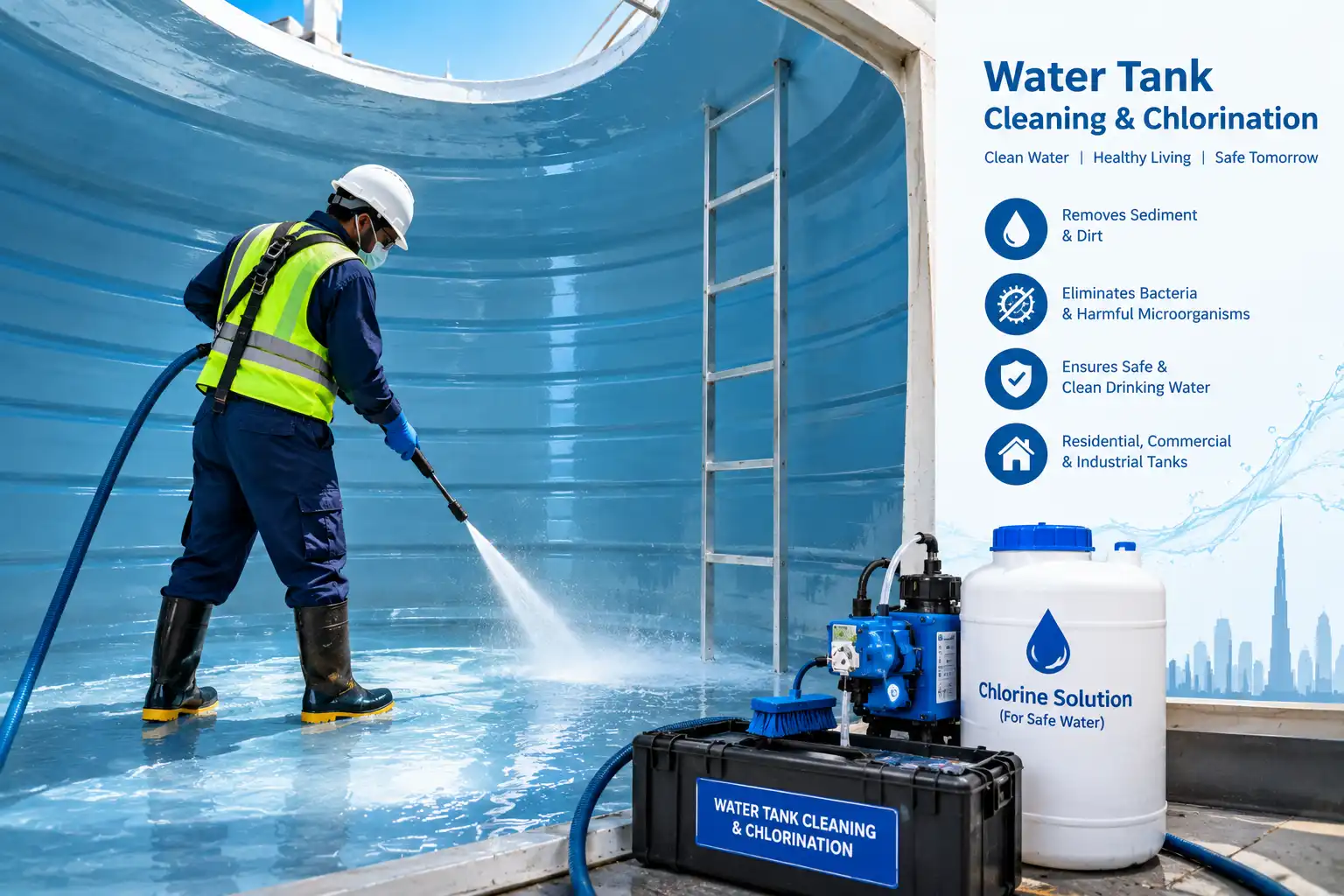
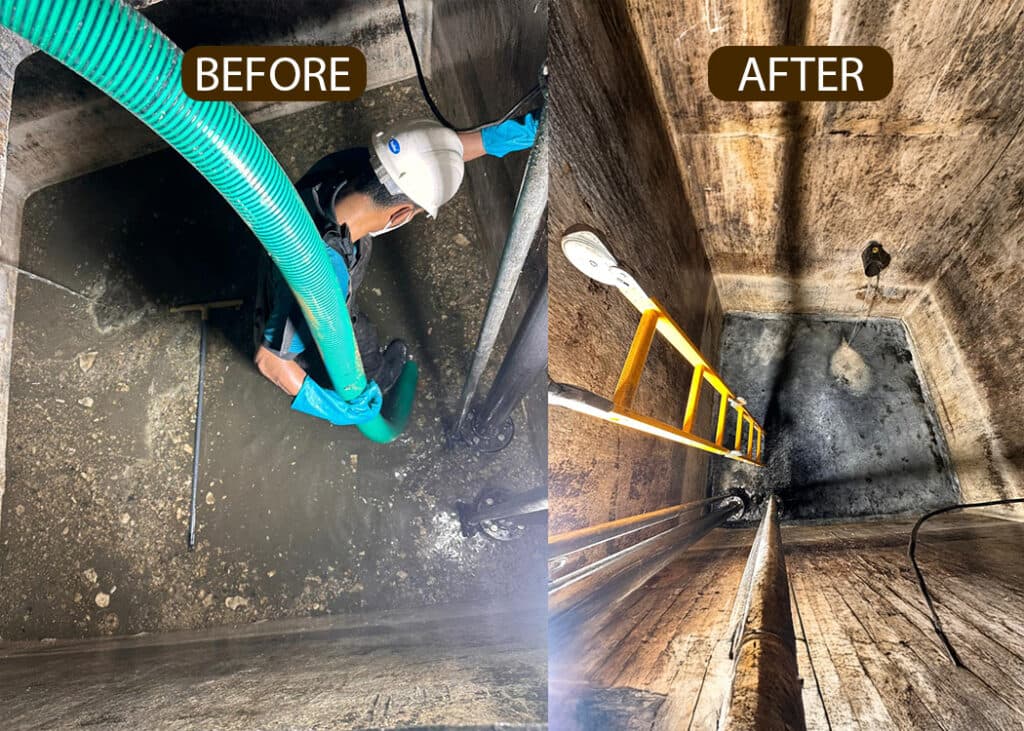
Walls and floors were scrubbed and high-pressure cleaned, sludge removed, and the tank rinsed and drained.
Chlorination
The system was dosed with chlorine to a strong disinfecting concentration and the dosed water carried through to the supply points.
Contact Period
The chlorinated water was held in the system for 24 hours to fully disinfect it.
De-Chlorination and Flushing
The system was then flushed and the chlorine brought back down to a safe residual.
Testing and Handover
Chlorine was measured at the tanks, washroom and supply points before the water was returned to service, and all readings recorded in a completion report.
The Readings That Prove It Worked
The value of this job is in the numbers:
Chlorination (target >50 ppm): 85 ppm at the rooftop tanks, 68 ppm at the washroom, 71 ppm at the supply points — confirming the disinfectant reached every part of the system.
De-chlorination (target <5 ppm): 0.24 ppm at the rooftop tanks, 0.25 ppm at the washroom, 0.34 ppm at the supply points — a safe, usable residual.
That progression — dose high to disinfect, confirm it reached every outlet, then bring it safely back down — is exactly what a properly executed tank disinfection looks like. The client received it all as a documented record, not a verbal “all done.”
The De-Chlorination Step Most Companies Skip
Here’s the part that separates a proper job from a rushed one. Chlorinating a tank is easy; bringing the chlorine back down to a level that’s safe to drink and use is the step that actually protects the occupants. Returning over-chlorinated water to a building is unsafe and smells of chlorine. This job didn’t hand the system back until de-chlorination and flushing had brought the residual to 0.24–0.34 ppm and testing confirmed it. If a tank cleaner can’t show you a de-chlorination reading, they haven’t finished the job.
Safety and Confined-Space Handling
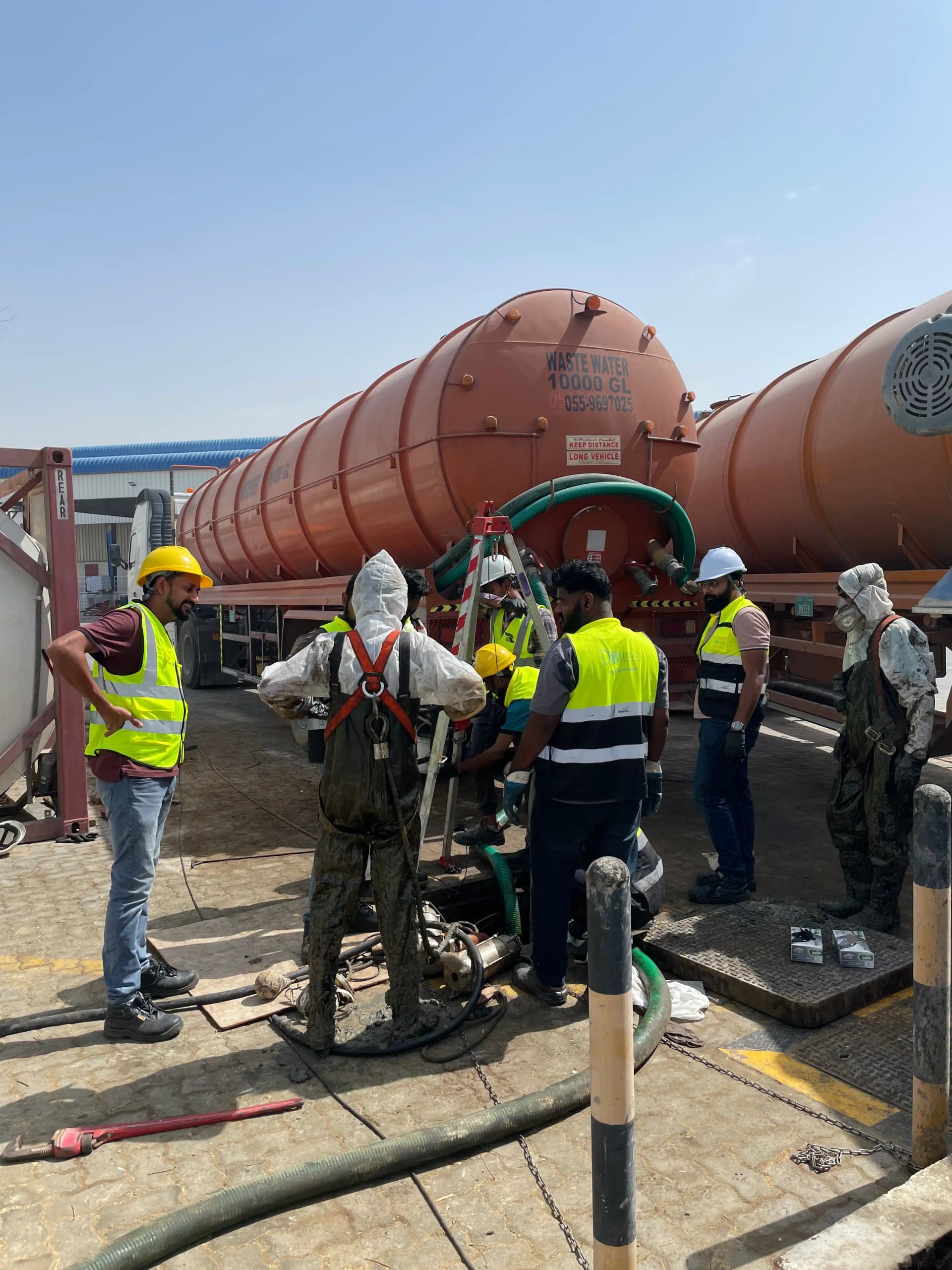
Water tanks are confined spaces, and this job was run accordingly: lock-out/tag-out of all inlets and outlets, venting, and gas testing with a meter before entry, with the correct PPE and confined-space equipment used throughout. No shortcut on entry safety, and no water returned to service until the readings said it was fit to use.
Why Dotless
Dotless Cleaning Services L.L.C (Licence 1365142) has cleaned and disinfected water tanks across Dubai since 2017, serving 1000+ clients from villas and towers to contractors and industrial facilities. Tank cleaning and chlorination are carried out under DM-FSD Operator’s Permit Sr. No. 00292 and PCFC Certificate of Approval No. 2727, and every job closes with a documented completion report — the premises, the method, and the before-and-after chlorine readings — so the client holds proof of a compliant service
Frequently Asked Questions
Is water tank cleaning the same as disinfection?
No. Cleaning removes sediment and scale; disinfection (chlorination) kills bacteria. A complete service does both, then de-chlorinates so the water is safe to use.
What chlorine level is safe in a building’s water?
During disinfection the water is dosed far higher (here, up to 85 ppm), but it’s flushed and de-chlorinated back to a safe residual before use — in this job, 0.24–0.34 ppm at the outlets.
What is de-chlorination and why does it matter?
It’s the step that brings chlorine back down to a safe, usable level after the contact period. Skipping it leaves over-chlorinated water that’s unsafe and smells of chlorine.
How long does the process take?
The chlorinated water needs a contact period to disinfect fully — 24 hours in this job — before de-chlorination, flushing and final testing.
Do I get documentation after the service?
Yes. Dotless issues a completion report covering the premises, the method and the before-and-after chlorine readings, so you hold proof of a compliant service.
Do you work in Dubai South?
Yes — this job was carried out at a maintenance building in Dubai South, and Dotless serves Dubai South and the wider Emirate.
Need your building’s water tanks cleaned, chlorinated and certified with measured readings?
More case studies
Food Product Destruction Dubai | DM Certificate
Read case study
Water Supply Disinfection Case Study
Read case study