Oil Sludge Removal and Tank Cleaning for Tristar Transport LLC — A Dubai Municipality-Approved Case Study
39.66 metric tons. That is the volume of hazardous oily water and oil sludge removed, tested, permitted, transported, and recycled from a single industrial workshop facility in Dubai — all within a 3 to 4 week compliance-driven timeline.
The client was Tristar Transport LLC, one of the UAE's largest integrated energy and logistics companies. The challenge was not simply cleaning a tank. It was managing two separate regulated waste streams simultaneously — trade wastewater and hazardous oil sludge — each requiring different Dubai Municipality approvals, different transport permits, and different certified disposal routes.This is a full account of how Dotless executed the project from first sampling through to final recycling certification.
Project Overview
Client: Tristar Transport LLC Project type: Oil holding tank cleaning, oil sludge removal, and hazardous oily water disposal Facility type: Industrial vehicle maintenance workshop, Dubai Scope: Two-partition oil holding tank Total waste handled: 39.66 metric tons WDS Reference: WDS-200723-33863 Recycling Certificate Reference: 0027-GE-DC Date of waste receipt at facility: 28 September 2023 Date of destruction confirmed: 5 October 2023 Total timeline: 3 to 4 weeks
The Client's Challenge
Industrial vehicle maintenance and transport workshops accumulate complex mixed waste streams that cannot be managed through standard waste removal. Oil, lubricants, workshop runoff, and sludge settle in holding tanks and oil separators over time. Left unmanaged, they create overflow risk, contamination of adjacent drainage systems, and direct regulatory exposure under Dubai Municipality's environmental protection framework.
Tristar Transport LLC required a service provider who could handle the full compliance chain — not just the physical cleaning work. Their specific requirements included a Dubai Municipality-approved contractor, accurate laboratory classification of each waste stream, compliant transportation using permitted hazardous waste vehicles, and a full documentation package including recycling certification for regulatory audit purposes.
A contractor unable to complete all of these steps in sequence would have left the waste stranded mid-process — a failure mode that carries significant fines, operational disruption, and environmental liability.
Dotless Compliance-First Approach — Step by Step
Step 1 — Wastewater and Sludge Sampling and…
The project opened with field sampling of both the liquid waste and the accumulated sludge from the two-partition oil holding tank. Samples were submitted to an EIAC-accredited laboratory for full analysis.
This testing phase is not optional — it is the regulatory foundation for everything that follows. Laboratory results determine whether the liquid waste classifies as trade wastewater (non-hazardous) or hazardous wastewater, and whether the sludge must be handled under the hazardous waste framework. Getting the classification wrong at this stage means rejection at the Dubai Municipality WDS stage, rejection at the disposal facility, or a dangerous mismatch between the permit and the actual waste being transported.
In Tristar's case, testing confirmed the liquid waste as hazardous oily water, and the sludge as hazardous oil sludge — both requiring separate WDS applications and separate permitted disposal routes.
Step 2 — WDS Permit Application Through Dubai…
With laboratory results confirmed, Dotless's compliance team prepared and submitted the WDS permit application through Dubai Municipality's online portal at waste.dm.gov.ae. The application declared both waste streams — hazardous wastewater (oily water) and oil sludge — with supporting documentation including the EIAC lab report, waste photographs, and waste location details.
WDS Reference WDS-200723-33863 was issued upon Dubai Municipality's approval, authorising the collection, transport, and disposal of the declared waste. No vehicle could legally collect from the Tristar facility without this permit confirmed and a copy present during transport.
Step 3 — Tank Cleaning and Sludge Removal…
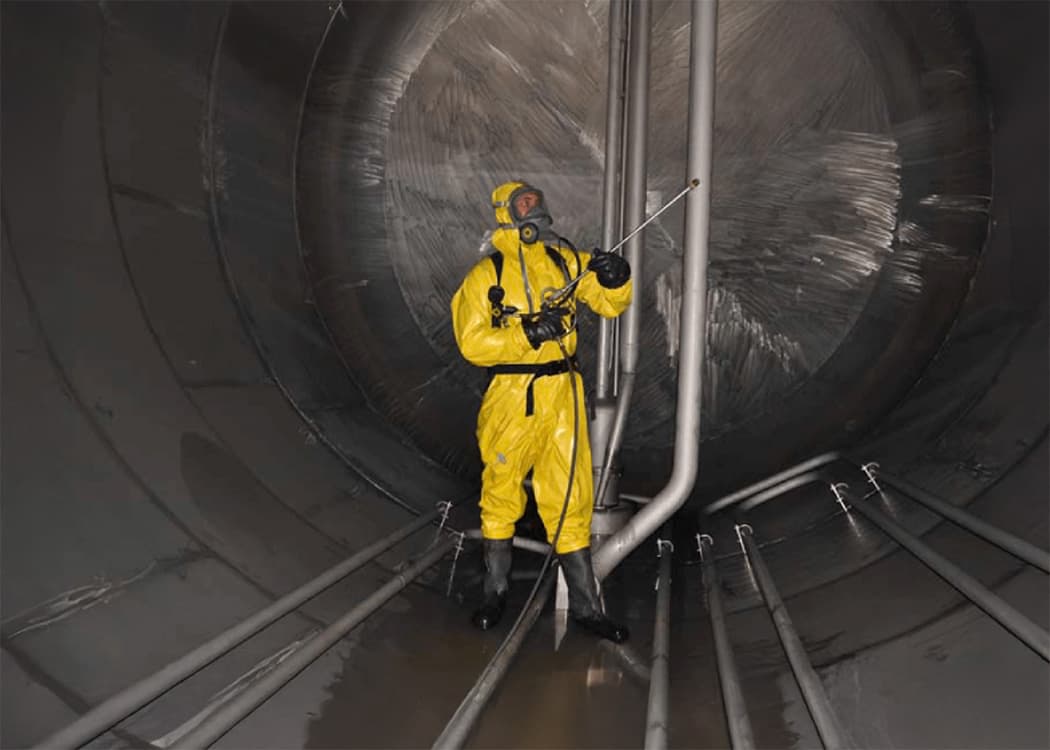
Following WDS approval, the Dotless operations team mobilised to site. The tank cleaning scope covered the full two-partition oil holding tank.
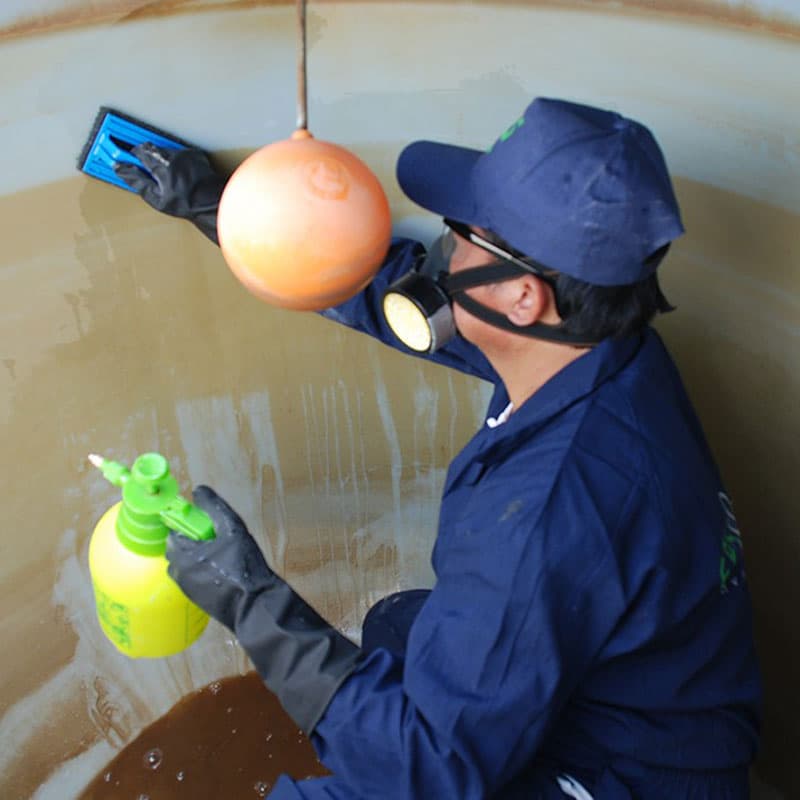
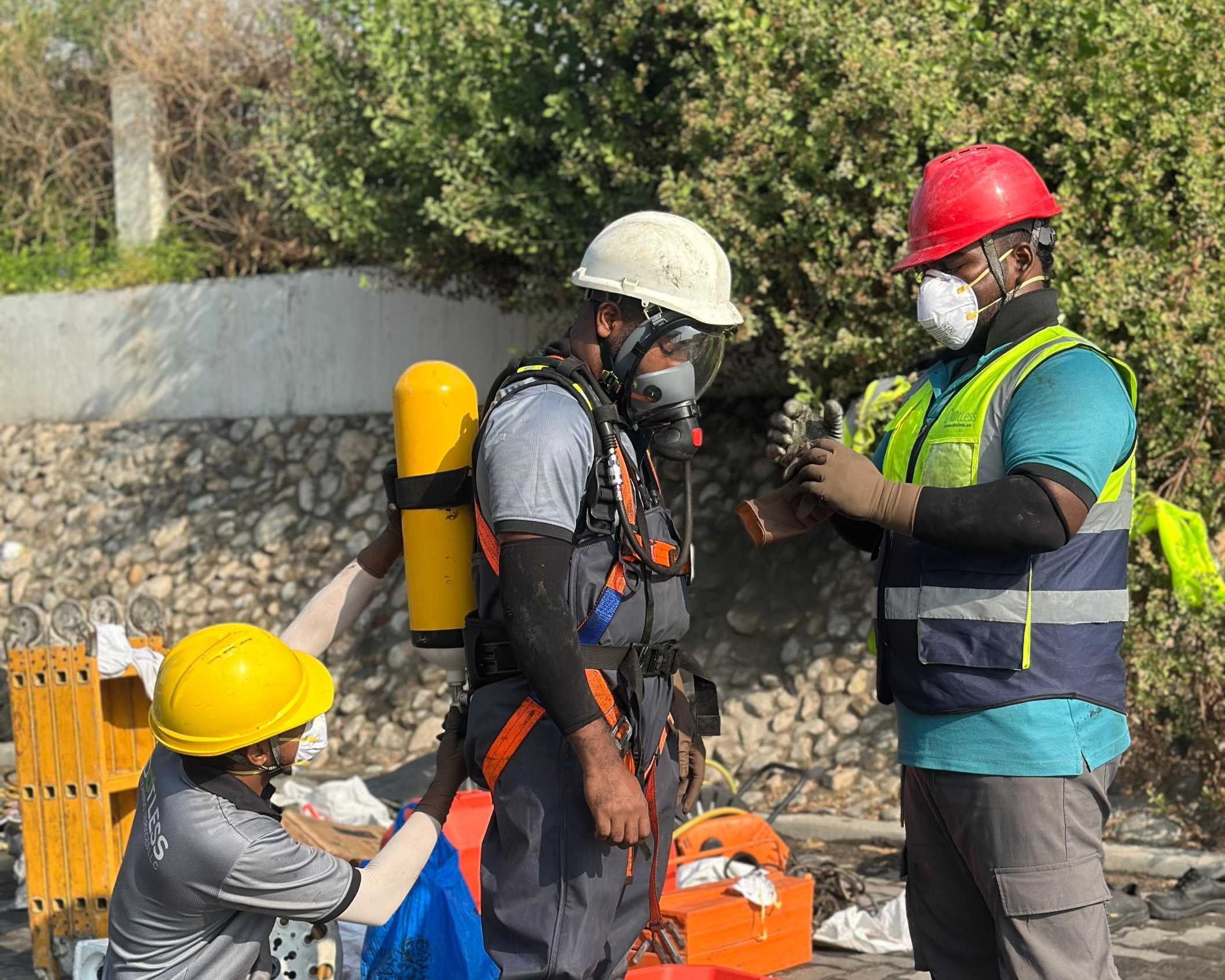
The process involved tank isolation, deployment of confined-space trained personnel with appropriate safety equipment and ventilation procedures, mechanical sludge extraction from both compartments, and high-pressure surface cleaning of tank walls and floors. All work was conducted in accordance with UAE environmental health and safety standards and Dubai Municipality technical guidelines on handling and transport of hazardous waste.
Step 4 — Waste Segregation and Separate Handling
Based on laboratory classification results, both waste streams were managed independently:
The hazardous oily water (liquid fraction) was loaded into Dubai Municipality-approved tanker vehicles for transport to an authorised trade wastewater disposal facility under the WDS permit conditions.
The oil sludge (solid/semi-solid fraction) was contained in approved sealed containers, labelled in accordance with Dubai Municipality Technical Guideline No. 11 requirements for hazardous waste packaging and vehicle placards, and loaded onto Hazardous Waste Transport Vehicles (HWTV) holding valid HWTV permits covering the relevant waste categories. Each vehicle was tracked via the RASID GPS system throughout the collection and transport route.
Step 5 — Transport to DM-Approved Disposal and…
Both waste streams were transported directly to their respective authorised disposal destinations. The oil sludge was delivered to a Dubai Municipality-approved recycling facility where the recovered materials were processed into waste-derived fuel — an authorised recycling pathway under Dubai Municipality's hazardous waste framework, supporting reduction in landfill dependency and alignment with UAE environmental sustainability policies.
Step 6 — Recycling Certificate and Final…
Upon completion of destruction and recycling, a Recycling Certificate (Reference 0027-GE-DC, dated 10 October 2023) was issued by the DM-approved recycling facility, confirming that all 39.66 metric tons of declared material had been destructed in full compliance with UAE Federal Laws, Local Orders, and Dubai Municipality Technical Guidelines.
Download document
Complete Documentation Package Delivered to Client
At project completion, Dotless provided Tristar Transport LLC with:
WDS disposal record (Reference WDS-200723-33863) confirming Dubai Municipality approval and waste details. EIAC laboratory analysis reports for both waste streams. Waste transport manifests for hazardous oily water and oil sludge movements. Recycling certificate (Reference 0027-GE-DC) confirming destruction at a DM-approved facility. HWTV vehicle permit records confirming authorised transport.
This documentation package serves as full audit evidence for Dubai Municipality, environmental authority inspections, and Tristar's own internal compliance records.
Project Timeline
The complete operation ran from late September to early October 2023, covering five sequential stages across 3 to 4 weeks:
EIAC laboratory sampling and results. Dubai Municipality WDS permit submission and approval. Physical tank cleaning and sludge removal at site. Waste transport to authorised disposal facilities. Final recycling certification issued 10 October 2023.
The timeline was driven by Dubai Municipality's WDS approval process. Once the permit was issued, the physical work and disposal were completed within days.
Why Industrial Facilities Choose Dotless for Oily Water and Sludge Removal
Industrial workshops, logistics companies, and vehicle maintenance facilities in Dubai face a compliance challenge that most general cleaning companies cannot resolve — the waste they generate is hazardous, and its management is governed by a multi-step regulatory process that requires permits, licensed vehicles, certified transport documentation, and disposal certification.
Dotless holds active HWTV permits covering hazardous waste categories including liquid hazardous waste (Type B) and chemical waste (Type G), a RASID GPS-tracked fleet registered with Dubai Municipality for hazardous waste transport, in-house compliance expertise managing WDS applications from initial sampling through to final certificate, and confined-space trained tank cleaning crews operating under UAE EHS standards.
The result is a single point of accountability from first site visit to final documentation — no gaps, no handoffs to unlicensed subcontractors, no compliance exposure for the client.
Industries Requiring This Service in Dubai
The same service that Tristar Transport LLC required is needed across a wide range of industrial sectors operating in Dubai. Oil holding tank cleaning and oily water disposal are necessary for vehicle maintenance workshops and transport depots, manufacturing facilities with oil separation systems, oil and gas support service companies, marine and shipping operators with bilge water and oily sludge accumulation, automotive service centres and fleet maintenance facilities, and industrial facilities in free zones including JAFZA, DIP, DIC, and Dubai Industrial City.
If your facility has oil holding tanks, oil separators, or accumulated oily sludge requiring removal, the same compliance-first process Dotless delivered for Tristar Transport LLC applies to your operation.
Frequently Asked Questions
Does oily water from a workshop require a Dubai Municipality permit before disposal?
Yes. Oily water and oil sludge from industrial workshops are classified as hazardous waste (liquid hazardous waste, Type B or similar) under Dubai Municipality's waste classification framework. A WDS permit from Dubai Municipality is required before any collection, transport, or disposal can take place legally.
What is the difference between trade wastewater and hazardous wastewater?
The classification is determined by laboratory analysis. Trade wastewater is non-hazardous industrial wastewater that does not exceed Dubai Municipality's discharge limits. Hazardous wastewater — including oily water from vehicle maintenance workshops — exceeds those limits or contains regulated contaminants, requiring a different disposal route and HWTV-permitted transport.
How long does an oil sludge removal and tank cleaning project take in Dubai?
A fully compliant project — covering EIAC lab sampling, WDS permit approval, physical tank cleaning, transport, and disposal certification — typically runs 3 to 4 weeks from first engagement, depending on Dubai Municipality's permit processing timeline.
Can oil sludge be recycled in Dubai?
Yes. Oil sludge that meets the required specifications can be processed at a Dubai Municipality-approved recycling facility and converted into waste-derived fuel, supporting resource recovery and reducing landfill use. Dotless manages the full chain from sludge extraction to recycling certification
What permits must a waste contractor hold to collect oily water in Dubai?
The contractor must hold a valid HWTV permit from Dubai Municipality specifically covering the relevant waste category (typically Type B — liquid hazardous waste), RASID GPS registration for all transport vehicles, and must operate under a valid WDS permit issued for the specific job before collection begins.
What documentation does the client receive after oily water and sludge disposal?
A fully compliant Dotless project delivers: the WDS disposal record, EIAC laboratory reports, waste transport manifests, and the recycling certificate from the DM-approved disposal facility. These documents confirm end-to-end compliance for audit and regulatory purposes.
Need a waste collection? We dispatch same-day.
More case studies
Food Product Destruction Dubai | DM Certificate
Read case study
Water Supply Disinfection Case Study
Read case study